




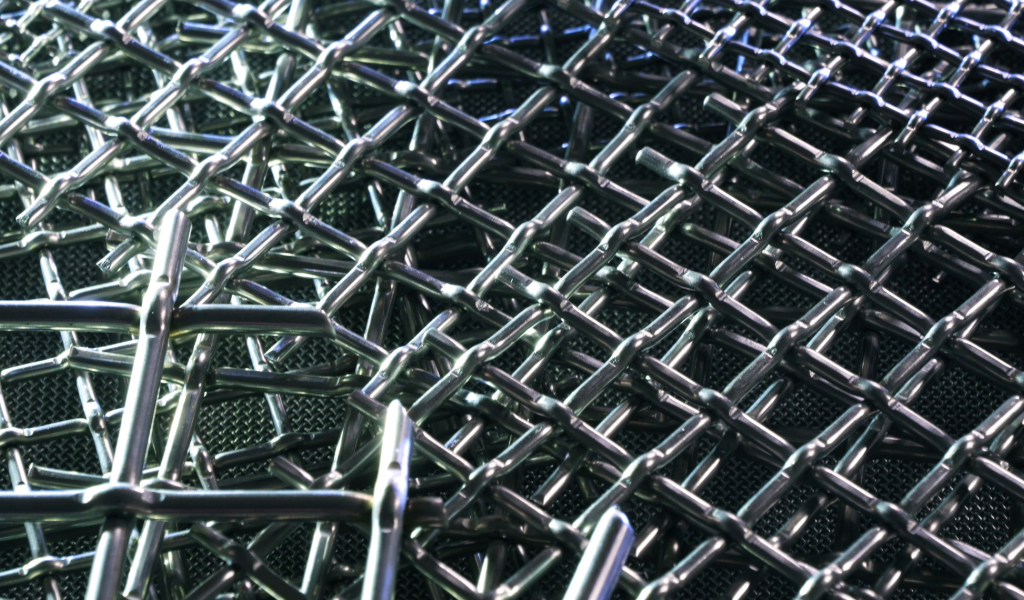


In pharmaceutical Nutsche filter dryers, the filter media is not only a separation surface, but an extension of the process itself. During filtration, washing, and drying, the media is repeatedly exposed to varying chemistries, temperature swings, and mechanical stress, all while maintaining consistent flow and particle retention. When those process demands increase or formulations evolve, the conversation often shifts from pore size and permeability to a more fundamental question: is the alloy behind the filter media still the right choice?
POROSTAR laminated woven wire mesh is designed specifically for applications where structural stability, migration-free filtration, and reproducible performance are essential. Its multi-layer construction provides predictable pore geometry and mechanical strength, making it a natural fit for pharmaceutical Nutsche filter dryers. However, even with an optimized filter design, overall performance is still closely tied to material selection. The choice between commonly used 316L stainless steel and higher-alloy alternatives such as 904L can have a measurable impact on corrosion resistance, cleanability, and long-term reliability in pharma applications.
At W.S. Tyler, our work has always centered on enabling cleaner and safer separation processes through thoughtful engineering and material science. With more than 150 years of expertise in woven wire mesh and filtration solutions, we understand that alloy selection in pharmaceutical equipment is rarely about what looks best on paper, but rather about matching real-world process conditions with materials that support consistent quality, validated cleaning, and dependable service life over years of operation.
This article takes a closer look at how 316L and 904L stainless steel compare when used in POROSTAR filter media for pharmaceutical Nutsche filter dryers. We’ll outline why POROSTAR material selection matters in these systems, examine the practical advantages and limitations of each alloy, and help frame a cleaner decision-making path for selecting the right POROSTAR construction based on your specific process conditions.
Why POROSTAR Material Selection Matters with Nutsche Filters
In a pharmaceutical Nutsche filter dryer, the filter media must do far more than separate solids from liquids. It must maintain structural stability under vacuum or pressure, support uniform cake formation, allow predictable flow during washing, and withstand repeated thermal and mechanical cycling during drying and cleaning. POROSTAR laminated woven wire media is engineered specifically to meet those demands, using bonded wire mesh layers that preserve pore geometry while delivering high mechanical strength. Within this design, material selection becomes a foundational decision that influences how the filter behaves over its entire service life.
Because POROSTAR is commonly welded, formed, and integrated directly into Nutsche filter plates or elements, the alloy must also support fabrication, long-term weld integrity, and surface quality requirements expected in pharmaceutical processing. Austenitic stainless steels such as 316L and 904L are frequently specified because they align with cGMP expectations for hygienic design, offer low carbon content to minimize weld-related corrosion, and are compatible with typical pharmaceutical solvents and cleaning regimes. However, not all stainless steels respond the same way once they are exposed to real operating conditions inside of a Nutsche filter dryer.
Looking to compare the benefits of other alloys for your nutsche filter dryer system? Check out our article below to learn more:
Material selection within POROSTAR directly affects how the filter media handles stress concentrations, differential pressure, and repeated CIP and SIP cycles without altering pore structure or surface condition. Over time, even subtle material limitations can influence cleanability, inspection outcomes, and maintenance intervals. That’s why the choice between 316L and 904L should not be viewed as a simple upgrade decision, but rather as a process-driven evaluation that considers how the POROSTAR media will perform as part of an integrated Nutsche filtration system.
Pros and Cons of 316L vs 904L in POROSTAR Nutsche Filters
When comparing 316L and 904L for use in POROSTAR laminated woven wire media, the most meaningful differences emerge once the filter is placed into pharmaceutical service. While both alloys are widely accepted in cGMP environments, their alloy chemistry drives very different performance outcomes when exposed to aggressive process conditions, extended operating cycles, and frequent cleaning.
316L stainless steel is the most commonly specified alloy for pharmaceutical filtration equipment, including Nutsche filter dryers. In POROSTAR constructions, it offers a strong balance between corrosion resistance, manufacturability, and cost, making it well-suited for many standard pharmaceutical processes.
Some key advantages of 316L include:
- Good resistance to a wide range of organic solvents and aqueous media
- Compatibility with typical pharmaceutical CIP and SIP programs
- Excellent weldability and formability for integration into filter plates and elements, such as POROSTAR
- Broad industry acceptance and predictable availability
However, as process severity increases, certain limitations may become more apparent.
Potential drawbacks of 316L in demanding pharma service include:
- Increased susceptibility to pitting or crevice corrosion in chloride-rich environments
- Reduced corrosion margin when exposed to strong acids or aggressive cleaning chemistries
- Shortened service life in processes with frequent thermal cycling or elevated temperatures
For applications with stable chemistries and well-controlled cleaning protocols, 316L POROSTAR often provides reliable, cost-effective performance. Challenges typically arise when the process begins to push beyond those baseline conditions.
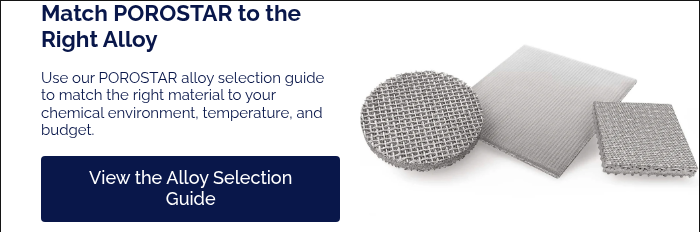
904L stainless steel is a higher-alloy austenitic grade developed for enhanced corrosion resistance in more aggressive environments. Its elevated nickel and molybdenum content, along with added copper, provides a larger safety margin against localized corrosion mechanisms that can impact filter media over time.
Key advantages of 904L POROSTAR include:
- Superior resistance to pitting and crevice corrosion
- Improved durability in acidic and chemically aggressive process streams
- Better long-term surface stability under repeated CIP and SIP exposure
- Reduced risk of corrosion-related changes to pore structure or cleanability
These benefits can be especially valuable in pharmaceutical Nutsche filters handling challenging solvents, high-acid formulations, or intensified cleaning cycles designed to support rapid product changeovers.
That said, 904L is not always the best choice for a variety of reasons.
Considerations when evaluating 904L POROSTAR include:
- Higher material and fabrication costs compared to 316L
- Limited added value in mild or well-controlled process environments
- Risk of over-specifying alloy performance beyond actual process needs
In many cases, 904L POROSTAR is most effective when used strategically, such as where corrosion risk has already been demonstrated or where long service life and reduced maintenance justify the higher initial investment.
Rather than viewing 316L and 904L as competing options, it’s more useful to treat them as tools suited to different pharmaceutical filtration conditions. 316L remains a strong, versatile choice for many Nutsche filter applications, while 904L provides an added layer of protection when processes demand greater corrosion resistance and long-term stability. Matching POROSTAR alloy selection to real operating conditions helps support consistent filtration performance without unnecessary complexity or cost.
Choosing the Right POROSTAR Alloy with Confidence
In pharmaceutical Nutsche filtration, material selection is rarely revisited until something changes, such as new chemistries, tighter cleaning requirements, or unexpected wear that shows up during inspection. The comparison between 316L and 904L in POROSTAR media highlights how early material decisions can quietly shape long-term performance, maintenance expectations, and operational risk inside a filter dryer. Neither alloy is universally right or wrong, because as usual, it depends on your system and the application.
A confident next step is to tie alloy selection directly to how your Nutsche system is actually being used today, and how it may evolve tomorrow. Processes that remain chemically consistent with controlled CIP and SIP parameters often continue to perform well with 316L POROSTAR. When solvent aggressiveness, cleaning intensity, or campaign length begins to increase, higher-alloy options like 904L can provide a wider operating margin and greater long-term stability. The goal is not to over-engineer, but to reduce uncertainty where it matters most.
At W.S. Tyler, we focus on connecting material science with practical filtration performance, helping manufacturers to design POROSTAR solutions that support safer operation, cleaner processing, and predictable results over time. More than 150 years of working with woven wire filtration have reinforced one truth: the right material choice protects the process long after installation.
Want to learn about more high-grade alloys that can improve the performance of your Nutsche dryer system? Read the article below to learn more: