






Hot gas filtration presents a unique set of challenges for industrial operations running at elevated temperatures. In processes across chemical manufacturing, petrochemical processing, plastics production, and mechanical engineering, hot gas streams often carry fine, abrasive particulates that can quickly compromise traditional filter media. Excessive heat, fluctuating pressures, and aggressive process conditions make long-term filtration reliability difficult to achieve, especially when filter materials release particles, deform, or lose permeability over time.
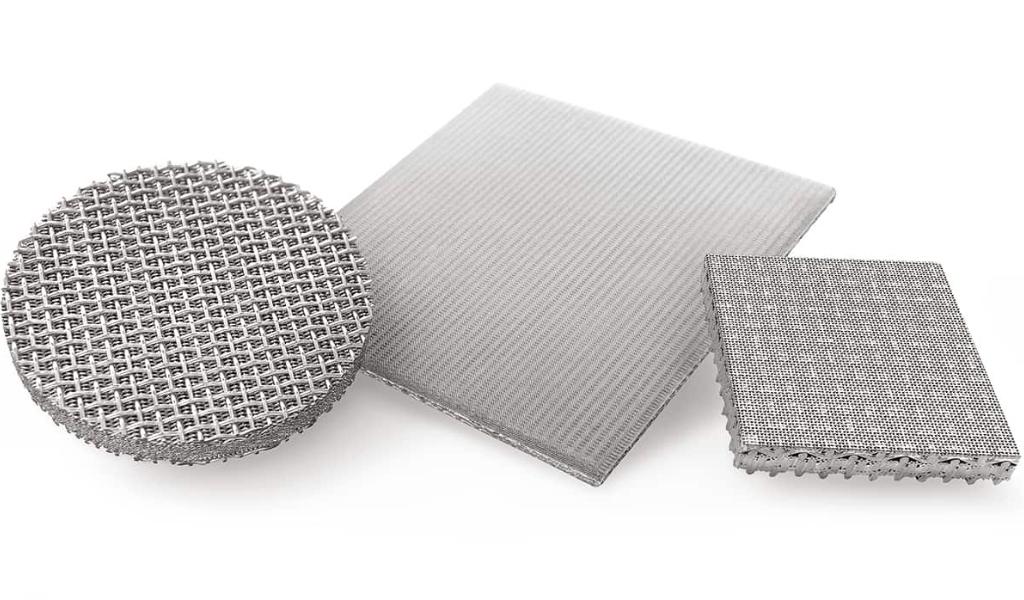
To address these conditions, engineered woven wire solutions like POROSTAR offer a more stable and predictable approach to hot gas filtration. POROSTAR is a multi-layer woven wire laminate in which individual wire cloth layers are diffusion-bonded using a diffusion process. This method permanently bonds each contact point between layers while preserving the geometric structure of the woven mesh, resulting in a stable, porous filter medium with precisely defined pore size, porosity, and permeability.
At W.S. Tyler, our mission is to support cleaner, safer, and more efficient industrial processes. With more than 150 years of experience engineering woven wire and filtration solutions, we understand the importance of filtration media that perform reliably under real-world operating conditions. POROSTAR reflects that commitment by enabling migration-free filtration, even under maximum operating pressures, helping to protect downstream equipment and maintain consistent process performance.
In this article, we’ll explore the many demands placed on hot gas filtration systems, examine how POROSTAR addresses common filtration challenges, and highlight the key benefits it delivers in high-temperature applications. By understanding how POROSTAR is engineered and where it performs best, you can make more informed decisions about improving filtration reliability, efficiency, and system longevity.
The Many Demands of Hot Gas Filtration
Hot gas filtration systems are required to perform under conditions that push filtration media far beyond typical operating limits. Many industrial processes generate gas streams at temperatures exceeding 260°C, with some applications reaching 400°C and higher, particularly in chemical processing, petrochemical refining, cement production, and power generation. At these elevated temperatures, filter media must withstand sustained thermal exposure without warping, cracking, or losing permeability, which is a challenge that eliminates many conventional fabric and polymer-based options early in the design phase.
Beyond temperature alone, hot gas streams often contain fine, abrasive particulate matter that can rapidly erode filtration surfaces. Particles such as catalyst fines, ash, or process dust can be highly aggressive when entrained in high-velocity gas flow. If the filter medium lacks sufficient mechanical strength or structural stability, this abrasion can lead to premature failure, increased pressure drop, and inconsistent filtration performance, which are all issues widely experienced across high-temperature gas filtration applications.
Chemical exposure adds another layer of complexity. Hot process gases frequently include corrosive compounds such as sulfur oxides, chlorides, or reactive hydrocarbons, depending on the application. These compounds can accelerate material degradation, particularly when combined with heat and moisture. As a result, filtration media used in hot gas environments must demonstrate not only thermal stability, but also strong corrosion resistance to maintain long-term performance and to protect downstream equipment.
Finally, hot gas filtration systems must balance filtration efficiency with system stability. High capture efficiency is critical for meeting emissions requirements and protecting sensitive downstream components, yet overly restrictive media can drive up pressure drop and energy consumption. Operators in the industry recognize the need for filter media with predictable pore structures, stable permeability, and cleanability to support continuous operation without frequent maintenance interruptions.
These demands make hot gas filtration one of the most technically challenging areas of industrial filtration. Selecting the right filter medium requires careful consideration of temperature resistance, mechanical strength, chemical compatibility, and flow performance, which are all factors that directly influence system reliability, operating costs, and overall process efficiency.
How POROSTAR Addresses These Common Issues
Meeting the demands of hot gas filtration requires a filter medium that is engineered for stability, not just heat resistance. POROSTAR addresses these challenges through its multi-layer woven wire laminate construction, where individual woven wire cloth layers are bonded using a unique diffusion process. Unlike disposable or fabric-based media, this process bonds each wire contact point without altering the geometric structure of the mesh, resulting in a rigid, porous filter plate with predictable pore size, porosity, and permeability.
One of the most critical issues in hot gas filtration is media degradation and particle migration under high temperature and pressure. In the hot gas industry, there is a high risk of fibers breaking down or particles shedding from filter media in elevated-temperature environments, which can contaminate downstream equipment and compromise your systems stability. POROSTAR is specifically designed to enable migration-free filtration, meaning no particles are released from the filter medium, making it well-suited for protecting sensitive downstream systems.
Thermal and mechanical stability are also essential when gas streams experience pressure fluctuations or variable loading. POROSTAR comes in multiple different layer configurations, such as STANDARD, LIGHT, HIFLO, and COMBI constructions created to match your systems specific flow, pressure, and mechanical requirements.

Chemical resistance also plays a major role in long-term filter performance, particularly in hot gas streams containing corrosive compounds. POROSTAR is commonly manufactured using corrosion-resistant alloys such as 316 stainless steel, Hastelloy, and Inconel, with additional alloy options available for more aggressive environments. This material flexibility allows the filter media to maintain structural integrity and filtration performance in chemically demanding applications where traditional media rapidly degrade.
Finally, POROSTAR supports a balance between filtration efficiency and system flow performance. With a filtration range from less than 1 micron up to 200 microns, the laminate structure enables precise particle retention while maintaining consistent permeability. This predictable flow behavior is critical in hot gas filtration systems, where excessive pressure drop can negatively impact energy efficiency and system uptime, which is an issue that is widely found across operators in the industry.
By combining structural stability, migration-free filtration, corrosion resistance, and configurable performance characteristics, POROSTAR directly addresses the core challenges that define hot gas filtration today.
Elevating Hot Gas Filtration Performance with POROSTAR
The hot gas filtration process places extreme demands on filtration systems, requiring media that can withstand high temperatures, abrasive particulates, pressure fluctuations, and chemically aggressive environments. As we’ve covered, these challenges make conventional filter materials unreliable in many high-heat applications. Engineered solutions like POROSTAR are designed specifically to meet these conditions, providing structural stability, predictable flow performance, and migration-free filtration across a wide particle size range.
For operations evaluating improvements to their hot gas filtration systems, the next step is understanding how filter media selection impacts long-term performance. Factors such as pore size requirements, operating temperatures, pressure differentials, and chemical exposure all play a role in determining the right POROSTAR configuration, whether that’s STANDARD, HIFLO, LIGHT, or COMBI. Working with experienced filtration specialists to match media specifications to process conditions can help to reduce maintenance requirements, protect downstream equipment, and improve overall system reliability.
At W.S. Tyler, our approach is rooted in helping customers build cleaner, safer, and more efficient industrial processes. With more than 150 years of experience engineering woven wire and filtration solutions, we focus on precision, consistency, and long-term performance. POROSTAR reflects that experience by combining woven wire technology with advanced filtration methods to support stable, dependable filtration in demanding environments.
Looking for more information on which weave type is best for your system? Check out our article below to learn more: