







Maintaining stable water quality in aquaculture systems has become increasingly challenging as production densities rise and recirculating aquaculture systems (RAS) continue to expand. Operators are under constant pressure to remove particles efficiently without introducing excessive downtime, flow restrictions, or filtration failures that can destabilize treatment downstream. In many systems, inconsistent filtration is a root cause of process instability, leading to elevated turbidity, increased oxygen demand, and stress on fish stocks, which are often before alarms or water chemistry indicators detect a problem.
To address these challenges, aquaculture facilities rely heavily on filtration media designed to capture solids early in the process while maintaining consistent flow and cleanability. Two of the most common material categories used for screen and panel filtration are synthetic mesh media and stainless-steel woven wire mesh. Each material behaves very differently under continuous aquaculture loading, particularly when exposed to frequent cleaning cycles and high cleaning pressures.
At W.S. Tyler, our mission is to help industries operate cleaner and safer, backed by more than 150 years of experience engineering precision woven wire solutions. That long-term perspective is critical in aquaculture, where filtration decisions directly affect uptime, water stability, and total operating cost. Filtration media that deforms, tears, or degrades prematurely can introduce hidden costs, including unplanned downtime, emergency replacements, and system instability caused by bypassed particles and mesh failure.
In this article, we will compare synthetic mesh media and stainless-steel woven wire mesh as they are used in aquaculture water filtration. We’ll begin by outlining the filtration media options available in modern aquaculture systems, then examine how synthetic materials perform under real-world aquaculture conditions. From there, we’ll explore the strengths of stainless-steel filtration, particularly in demanding environments, before tying these considerations into a practical framework for making informed filtration decisions that support long-term process stability and reliability.
Filtration Media Options Available in Modern Aquaculture
Modern aquaculture systems often rely on filtration as the first and most critical barrier for removing solids before they impact your downstream processes and overall water quality. As seen in RAS facilities, most aquaculture operations utilize drum and disc filters to intercept uneaten feed, fecal matter, and other organic debris early in the process. Aquaculture engineering consistently emphasizes that the performance of this first filtration stage has a direct effect on downstream process stability, oxygen demand, and system uptime, particularly as biomass loading increases over a production cycle.
Across today’s aquaculture designs, filtration media generally fall into two broad categories: synthetic mesh materials and metal-based filtration media, which is most commonly stainless-steel woven wire. Synthetic options, which include polymers such as polyethylene-based meshes, polypropylene, and nylon variants, are widely used due to their low initial cost, light weight, and compatibility with many drum, disc, and static screen designs. Stainless steel mesh, by contrast, is typically selected for applications where operators require higher throughputs, cleaning behavior, and overall process stability. Both media types are found in commercial aquaculture filtration equipment, including rotary drum filters and panel filtration systems used to protect your downstream processes.
Want to learn more about the strengths of RPD HIFLO vs plain weave wire? Check out the article below to discover more:
Looking at it from a system design perspective, your filtration media choice influences several key operational variables beyond particle capture alone. Your media’s filter fineness affects loading and pressure drop, while material strength determines how well filters tolerate higher cleaning pressures needed to remove fouling and sticky organic solids, which is an increasingly common challenge noted in high-density RAS installations. Filtration media stability also plays a measurable role in preventing solids bypass, which can otherwise contribute to fluctuating turbidity and reduced process stability over time. These factors help to explain why many aquaculture engineers evaluate media selection not just on micron rating, but on long-term behavior under real operating conditions.
Another important distinction between available filtration media lies in service life and failure risk. Synthetic meshes are known to deform, stretch, or tear when exposed to repeated cleaning, abrasion from solids, or variable operating pressures, which are conditions that frequently contribute to unplanned downtime. Stainless steel woven wire, particularly when manufactured with controlled weave geometry, maintains consistent filter fineness and pore sizes over extended service periods and can be cleaned more aggressively compared to synthetic materials without losing structural integrity. As aquaculture operations continue to shift toward higher automation and reduced maintenance windows, material durability has become a central consideration in filtration media selection rather than an afterthought.
How Synthetic Media Performs in Aquaculture Environments
Synthetic filtration media is commonly used in aquaculture systems because it is lightweight, inexpensive upfront, corrosion and chemical resistant, and easy to integrate into drum and disc filters. In low-to-moderate solids loading environments, synthetic mesh can effectively capture suspended waste and provide acceptable clarification, particularly during early production stages where biomass density and feeding rates are lower. For many operations, this makes synthetic media a practical starting point when budgets are constrained or system designs prioritize quick deployment.
As system loading increases, however, synthetic media begins to exhibit performance limitations that affect process stability. Synthetic meshes are flexible by nature, which means repeated exposure to changing water loads, rotational forces in drum filters, and uneven solids accumulation can cause gradual stretching or deformation. Once mesh openings lose their original geometry, particle capture becomes inconsistent, allowing fine solids to bypass filtration. This bypass does not always trigger immediate alarms, but it steadily increases organic loading downstream, placing additional stress on your filtration and dissolved oxygen control.
Cleaning requirements are a major operational consideration for synthetic mesh in aquaculture. Organic waste in fish farming environments tends to be sticky and bioactive, forming films that resist low-pressure spray cleaning. To maintain throughput, operators often increase cleaning pressure, particularly on drum filters. Elevated spray pressure accelerates wear on synthetic media, contributing to fatigue, thinning, and eventual tearing. Once localized damage occurs, it often propagates quickly, requiring unplanned shutdowns to replace panels, which can introduce avoidable system shutdown time during active production cycles.

The cost implications of synthetic mesh failure extend beyond the replacement material itself. Mesh damage can allow larger debris to pass through untreated, increasing turbidity and disrupting system balance before the issue is visually detected. Emergency maintenance, labor allocation, lost production time, and stress-related impacts on fish health all contribute to what appear as “hidden” costs tied directly to mesh failure. In facilities operating under continuous RAS systems, even short interruptions in filtration can have cascading effects on water stability.
Chemical exposure further influences synthetic media performance in aquaculture. Synthetic meshes generally exhibit good resistance to mild acids, bases, and disinfectants, which support routine sanitation protocols. However, repeated chemical cleaning, especially when combined with mechanical stress, can embrittle fibers over time, reducing tensile strength and accelerating failure under pressure. This interaction between chemical compatibility and mechanical durability becomes more pronounced in systems that rely heavily on frequent cleaning-in-place procedures to manage biofouling.
Taken together, synthetic filtration media performs best in aquaculture environments where solids loading is predictable, cleaning pressure remains relatively low, and filtration failure does not immediately threaten system stability.
The Strengths of Stainless Steel in Aquaculture Filtration
Stainless steel filtration media offers a fundamentally different performance profile in aquaculture environments, particularly where systems operate continuously and solids loading fluctuates throughout production cycles. Unlike flexible materials, stainless steel woven wire mesh maintains a rigid, fixed aperture width that does not stretch or deform under stress. This consistency allows filtration systems to sustain a stable cut point over time, which directly supports process stability by preventing unexpected solids bypass that can disrupt downstream processes and oxygen balance.
One of the most significant operational advantages of stainless-steel mesh is its tolerance for higher cleaning pressures. In aquaculture filtration, especially drum and disc filter applications, biofouling and organic films often require aggressive spray cleaning to restore flow. Stainless steel woven wire can withstand repeated high-pressure cleaning cycles without loss of structural integrity, making it well-suited for environments where frequent and forceful cleaning is unavoidable. This ability to clean thoroughly without damaging the filtration surface reduces both fouling persistence and cleaning frequency, stabilizing the differential pressure in the system.
Durability also plays a direct role in minimizing downtime. Stainless steel mesh is far less susceptible to tearing, abrasion, or localized failure than flexible alternatives, even under continuous exposure to suspended grit, feed fines, and biological solids. In aquaculture operations running RAS systems, this reliability translates to fewer emergency shutdowns and less reactive maintenance. By maintaining filtration performance over longer service intervals, stainless steel media helps operators avoid the growing costs associated with unplanned mesh failure, including lost labor efficiency, compromised water quality, and the risk to stock health.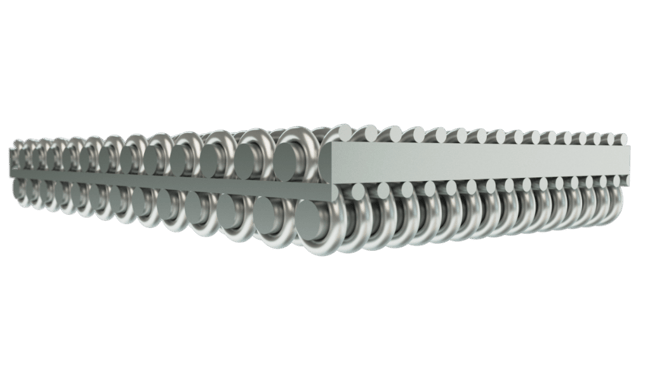
Chemical exposure remains an important consideration in aquaculture filtration, particularly in systems that incorporate routine sanitation to control biofouling and pathogen pressure. When properly specified, stainless steel filtration mesh, using alloys such as 316L stainless steel and even higher-grade alloys such as AVESTA 254 SMO and 904L, offer dependable resistance to chlorides, saltwater environments, and the oxidizing agents commonly used in aquaculture cleaning protocols.
From a cost perspective, stainless steel mesh shifts filtration economics from short‑term replacement cycles to long‑term performance control. Although the initial investment is higher, the reduction in replacement frequency, downtime, and system instability helps lower total cost of ownership over the life of the filtration system. For aquaculture facilities scaling production or tightening operational margins, this predictability becomes increasingly valuable as production density and regulatory scrutiny increase.
Within stainless steel options, advanced weave designs can further enhance aquaculture performance. W.S. Tyler’s RPD HIFLO high‑performance metal filter cloth is engineered to deliver over twice the flow rate and precise particle retention compared to similar filter cloth specifications at the same pore size. Designed for demanding filtration environments, RPD HIFLO combines controlled pore sizes between 5 and 40 microns with robust woven construction to support aggressive cleaning, stable filtration efficiency, and long service life, making it particularly well‑suited for aquaculture water filtration systems where uptime and consistency are critical.
For aquaculture operations already running synthetic-based filtration panels, transitioning to stainless steel does not necessarily require replacing the entire filter assembly. W.S. Tyler supports retrofit solutions where existing panels can be sent in and re-screened with stainless steel woven wire mesh. By removing the synthetic media and integrating stainless steel into the existing panel framework, operators can upgrade filtration performance, durability, and cleanability while minimizing capital investment and system downtime. This retrofit approach allows facilities to extend equipment life and improve filtration stability without redesigning or replacing their filtration infrastructure.
Making an Informed Aquaculture Filtration Decision
Selecting the right filtration media for aquaculture water treatment ultimately comes down to how well the material supports system stability over time. As we’ve explored, filtration media directly capture efficiency, cleaning effectiveness, and the risk of unexpected downtime. Synthetic media can meet baseline filtration needs short-term, but as operational demands increase, whether through higher stocking densities, tighter water quality targets, or continuous operation, the limitations associated with deformation, cleaning pressure tolerance, and failure risk become more pronounced. Stainless steel woven wire mesh addresses these challenges long-term by delivering consistent pore geometry, predictable performance, and long‑term reliability where it matters most.
Looking at it practically, aquaculture operators should evaluate filtration media not just by initial cost, but by how it performs under real operating conditions. Key questions to ask include how often the media must be cleaned, how much pressure cleaning requires, how failure is detected, and what happens to system stability if filtration performance degrades unexpectedly. Media that minimizes unplanned maintenance, supports aggressive cleaning when necessary, and reduces the likelihood of solids bypass can help maintain steady water quality and protect downstream biological processes, especially in RAS high‑intensity systems.
This long‑term perspective aligns with our mission at W.S. Tyler: helping customers operate cleaner and safer processes through material choices backed by over 150 years of woven wire expertise. That experience informs how we approach aquaculture filtration, not as a consumable component, but as a critical performance element that must withstand mechanical stress, cleaning demands, and continuous operation without compromising reliability. When filtration media performs consistently, it helps stabilize the entire system, from water clarity to fish health and operational control.
Want to learn more about the importance of flow rates in aquaculture systems? Check out the article below to learn more: