






Producing high‑quality cement starts long before the material arrives at a construction site. It begins with the consistency and accuracy of the raw flour used to create it. Because cement acts as the backbone of critical structures, any variation in fineness can affect strength, set times, and overall performance. This makes reliable particle size analysis not just beneficial but essential to meeting the demanding safety and performance standards of the modern construction sector.
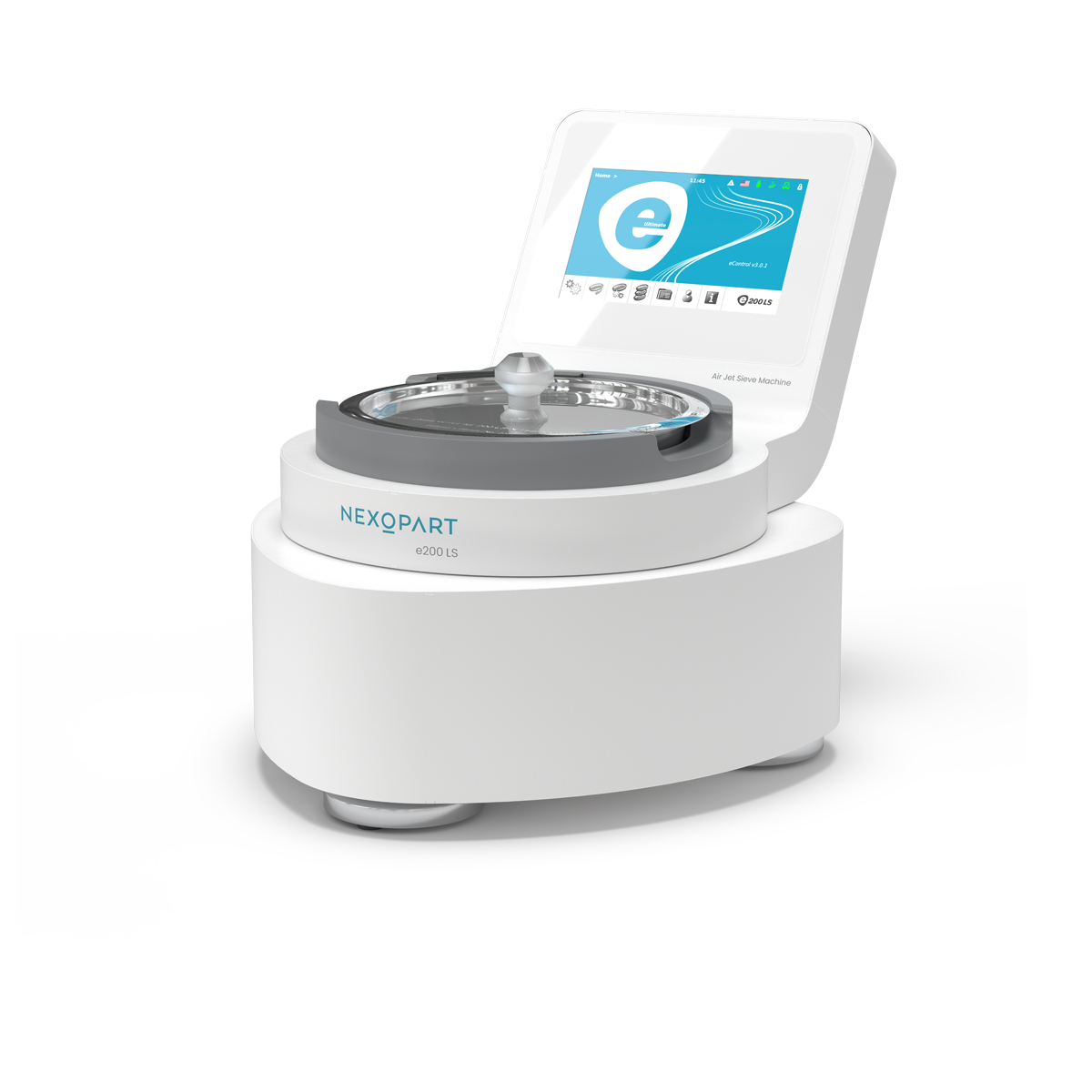
The air jet sieve e200 LS is specifically engineered to refine this early step in production. Designed to evaluate fine and very fine powders with precision, it provides an efficient way to separate, fractionate, and determine the grain size distribution of cement materials. By addressing the challenges associated with cohesive particles and fine powder agglomeration, the e200 LS ensures that laboratories and production teams receive fast, reproducible, and trustworthy results.
Built for environments where accuracy cannot be compromised, the e200 LS offers a comprehensive measuring range (from 10 µm to 4 mm) allowing cement manufacturers to fully capture the fineness profile of their raw materials. Features like automatic sieve detection, powerful vacuum integration, and intelligent software options help minimize human error while reducing testing time. This means teams can respond quickly to deviations and maintain tight control over production quality.
The Role of Particle Size Distribution in Cement Performance
Particle size distribution is one of the most influential factors in determining cement’s overall behavior, performance, and consistency. The fineness of raw flour directly impacts how cement hydrates, how quickly it sets, and ultimately how strong the final product becomes. Even minor deviations in particle size can create measurable shifts in workability, durability, and long‑term stability, which are qualities that are critical for structures expected to withstand environmental stress for decades.
Cement powders present a unique challenge because they are often extremely fine and cohesive. These characteristics make them susceptible to agglomeration, which can distort test results if the proper analytical method is not used. Traditional sieving processes frequently struggle with these fine particles, leading to unreliable measurements that fail to accurately represent the material’s true fineness profile. Reliable particle size data is also essential for maintaining production efficiency. When manufacturers have clear insight into the grain size distribution of their cement, they can optimize recipes, reduce waste, and respond quickly to deviations in grinding performance. In fact, leveraging precise fineness measurements can reduce material waste by as much as 80%, leading to both cost savings and more consistent product output.
The ability to obtain fast, reproducible measurements allows cement laboratories and production facilities to keep their processes stable and aligned with industry expectations. With accurate particle size distribution data, adjustments can be made immediately and with confidence, ensuring that the raw flour feeding the production line consistently meets safety and performance standards. Ultimately, it’s this level of control that helps cement manufacturers deliver a high‑quality end product capable of meeting today’s structural demands.
How the e200 LS Delivers Fast, Repeatable, and Highly Accurate Results
The e200 LS is designed to handle the unique challenges associated with fine cement powders, delivering results that are both precise and highly reproducible. At the core of its performance is an air jet sieving process that effectively disperses cohesive particles, which is something traditional mechanical sieving often struggles to achieve. By ensuring that powders do not clump or clog the sieve mesh, the system provides a far more accurate representation of the cement’s true fineness.
A major contributor to the machine’s efficiency is the interaction between its rotating slotted nozzle and a powerful industrial vacuum. While the vacuum generates a consistent pressure drop within the sieving chamber, the slotted nozzle directs a high‑speed air stream upward through the sieve mesh. This combination momentarily lifts and disperses particles before pulling them downward through the mesh, allowing the system to separate fine material quickly and cleanly.
Coarser particles remain on the sieve and are easily weighed at the end of the cycle to measure retained mass.
This method not only increases accuracy but significantly reduces testing times, allowing laboratories to conduct more analyses in less time. As part of routine quality control, the ability to accelerate sample processing can help reduce downtime in production environments, allowing teams to respond quickly to inconsistencies in grinding or mixing performance.
To support repeatability, the e200 LS incorporates intelligent features designed to reduce human error and streamline workflow:
- Automatic sieve detection for correct test setup
- Software options that enable automated measurements, digital reporting, and diagram creation
- Integration with scales, printers, or PCs for seamless data handling
- Measurement range of 10 µm to 4 mm, covering the full spectrum needed for cement analysis
- Sample capacity up to 30 g for representative testing
- Upgradeable system architecture, ensuring long‑term adaptability
Together, these capabilities give operators a clear, detailed view of their material quality. The high level of measurement precision makes it easier to identify deviations early, adjust processes promptly, and maintain consistent cement performance across production cycles.
Meeting Key Cement Testing Standards with an Air Jet Sieve System
Cement manufacturers operate in a world where consistency, safety, and standard compliance are fundamental requirements.
The e200 LS supports these expectations by aligning with the most widely recognized cement testing standards, ensuring that results are both trusted and traceable across the industry.
One of the primary standards the system complies with is DIN EN 196‑6, which defines air jet sieving as a validated method for determining the grinding fineness of cement. Traditional sieving methods often fall short due to the cohesive nature of fine cement particles, leading to inaccurate or inconsistent results. Air jet sieving, by contrast, effectively disperses fine material, allowing laboratories to generate representative data that meets the quality benchmarks outlined in the standard.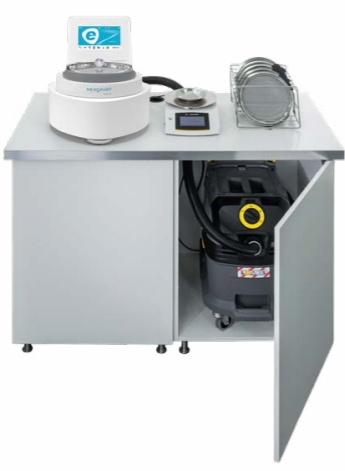
In addition to DIN compliance, the e200 LS supports ASTM C1891:2020, a test method used to determine the fineness of hydraulic cement using a 45‑µm (No. 325) sieve. This standard is recognized across many regions and provides a consistent framework for evaluating particle retention. Having a system that can reliably support this method allows cement facilities to meet regulatory expectations regardless of geographic location or regional testing requirements.
Beyond compliance, the machine’s intuitive design makes it easy to integrate into both laboratory settings and production workflows. Because it functions as a plug‑and‑play system, operators can quickly begin testing without complex setup procedures. It is also capable of communicating with other e200 LS units, allowing multi‑station environments to maintain synchronized, high‑quality testing processes.
Combined with a robust construction suited for demanding cement environments and a 12‑month warranty, the system delivers reliability that supports long‑term operational needs.
Collectively, these capabilities ensure that cement producers can meet industry‑recognized standards while maintaining a high level of testing efficiency. By pairing compliance with precision, the e200 LS becomes a dependable component in any facility’s quality assurance strategy. For teams seeking to refine their testing process and enhance the reliability of their cement materials, the e200 LS provides a practical path forward.