






In industries such as pharmaceuticals, chemicals, and specialty materials, achieving precise solid-liquid separation is critical. Yet, many operations struggle with inconsistent filtration rates, product contamination, and extended processing times. These issues often stem from one overlooked factor: the filtration media used in Nutsche filters. When the wrong media is selected, it can lead to poor cake formation, reduced throughput, and even equipment damage, ultimately impacting product quality and operational efficiency.
The good news is that optimizing Nutsche filter performance doesn’t always require a complete system overhaul. In fact, one of the most effective ways to enhance efficiency is by selecting the right filtration media. The media acts as the barrier between solids and liquids, influencing everything from flow rate to clarity of the filtrate. By understanding how different media types perform under varying conditions, such as W.S. Tyler’s multi-layer laminate POROSTAR, manufacturers can significantly improve filtration speed, product purity, and overall process reliability.
At W.S. Tyler, we’ve spent over 150 years engineering solutions that make industrial processes cleaner, safer, and more efficient. Our commitment to quality and innovation ensures that every woven wire mesh product we deliver meets the highest standards of performance and durability. By leveraging our expertise, we help manufacturers overcome filtration challenges and achieve consistent, high-quality results in even the most demanding environments.
In this article, we’ll break down the role filtration media plays in Nutsche filter performance and why it’s so critical to your process. We’ll start by explaining what filtration media is and how it functions within a Nutsche system. Then, we’ll explore how media properties impact filtration efficiency, including factors like particle retention and flow rate. Finally, we’ll outline key considerations for selecting the right media for your application, ensuring you can make informed decisions that optimize your operation.
Breaking Down Filtration Media for Nutsche Filters
Filtration media is the critical layer within a Nutsche filter that enables solid-liquid separation. As the Nutsche filter is positioned on the filter plate, it acts as a barrier that allows liquid to pass through while retaining solid particles.
This seemingly simple component plays a major role in determining filtration efficiency, product purity, and overall process reliability. Without the right media, even the most advanced Nutsche filter system can underperform, leading to longer cycle times and inconsistent results.
Nutsche filters can accommodate various media types depending on the application and process requirements.
The most common options include:
- Multi-Laminate Mesh Screens: Made from stainless steel or specialty alloys, these offer durability and precision. Different weave patterns allow customization for a good balance of flow rate and particle retention.
- Synthetic Filter Cloth: Typically made from polypropylene or polyester, these are cost-effective and generally used in less aggressive environments.
- Sintered Metallic Plates: These provide general strength and uniform pore distribution, making them ideal for high pressure or high-temperature applications.
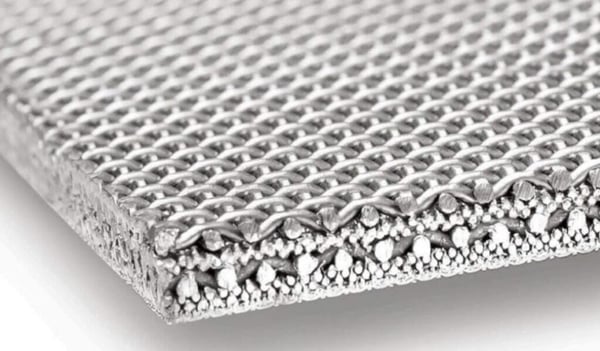
During operation, slurry enters the Nutsche filter vessel and settles on the filter media. Under vacuum or pressure, liquid passes through the media while solids form a filter cake on its surface. The characteristics of the media such as pore size, weave pattern, layer configuration, and material, directly influence filtration speed, clarity of the filtrate, and the quality of the cake.
A well-chosen media ensures efficient separation and minimizes downstream issues like contamination or reprocessing.
Several properties determine how well a filtration media performs in a Nutsche filter:
- Pore Size: Smaller pores capture finer particles but reduce flow rate.
- Material Compatibility: Media must resist corrosion and chemical attack from the process fluid.
- Mechanical Strength: High-pressure applications require robust media that won’t deform or delaminate under stress.
- Temperature Resistance: For processes involving heating or drying, media must withstand elevated temperatures without degradation.
Choosing the right filtration media is a strategic decision. The wrong choice can lead to frequent system downtime, higher operational costs, and compromised product quality.
Conversely, the right media enhances throughput, reduces downtime maintenance, and ensures compliance with industry standards like cGMP. Understanding these fundamentals sets the stage for optimizing your Nutsche filtration process.
How Filtration Media Impacts Filtration Efficiency
Filtration media is not just a passive component as it actively dictates how efficiently a Nutsche filter operates. The media determines the rate at which liquid passes through, the clarity of the filtrate, and the integrity of the filter cake.
When the media is properly matched to the slurry characteristics, filtration cycles are shorter, throughput increases, and product purity improves. Conversely, an ill-suited media can lead to extended cycle times, poor separation, and even equipment strain.
Want to discover more about how to handle clogging with your wire mesh filters? Learn more in our article below:
The filter cake acts as a secondary filtration layer, and its characteristics depend heavily on the media beneath it. A uniform, thin cake accelerates filtration and minimizes pressure drops, while uneven or overly thick cakes slow down the process. Media that supports consistent cake formation ensures better washing and drying, which is critical in pharmaceutical and chemical applications where purity and sterility is paramount.
Media selection has a direct effect on cycle time. For example, using a media with optimal permeability can reduce filtration time significantly, lowering energy consumption and labor costs. On the other hand, incorrect media can lead to frequent downtime for cleaning or replacement, increasing operational expenses and reducing overall productivity.
Key Considerations When Selecting Filtration Media
Every filtration process is unique, and the media you choose must align with your specific requirements. Start by analyzing factors such as particle size distribution, slurry viscosity, chemical composition, cake thickness, and operating temperature. For example, pharmaceutical applications often demand extremely fine particle retention, while chemical processes may prioritize corrosion resistance and durability.
Ease of cleaning and maintenance is often overlooked but critical for long-term efficiency. Woven wire mesh offers excellent cleanability through different means like backflushing, and an extended service life, making it ideal for industries with strict hygiene standards. Synthetic cloths, while cost-effective in the short term, may require more frequent replacement, increasing downtime and operational costs.
If you operate in regulated industries such as pharmaceuticals or food processing, compliance with standards like cGMP and FDA is essential. Selecting media that meets these requirements ensures product safety and avoids costly compliance issues.
Finally, partnering with a supplier who understands your industry can save time and money. Experienced providers can recommend media tailored to your slurry characteristics, operating conditions, and performance goals, all to help you avoid trial-and-error and achieve consistent results.
Ready to Take the Next Step in Filtration Optimization?
Throughout this article, we explored why filtration media is the backbone of Nutsche filter performance. From understanding its role in solid-liquid separation to examining how media properties influence efficiency and cycle times, it’s clear that media selection is not a minor detail as much as it’s a critical decision that shapes your entire process.
If you’re looking to improve throughput, reduce downtime, or achieve higher product purity, start by evaluating your current filtration media. Consider whether it aligns with your process requirements, operating conditions, and compliance standards. Making informed adjustments now can prevent costly inefficiencies later.
POROSTAR Nutsche plates are far more serviceable than many realize. Whether the damage is minor or severe, there are structured repair methods available. You can read the full breakdown in our in-depth article here.
At W.S. Tyler, we’ve spent over 150 years helping manufacturers optimize filtration processes with precision-engineered woven wire mesh solutions. Our mission remains the same: to deliver cleaner, safer, and more efficient operations through products that stand the test of time.
Want to dive deeper into filtration best practices? Check out our blog below to discover best practices for filter design: