




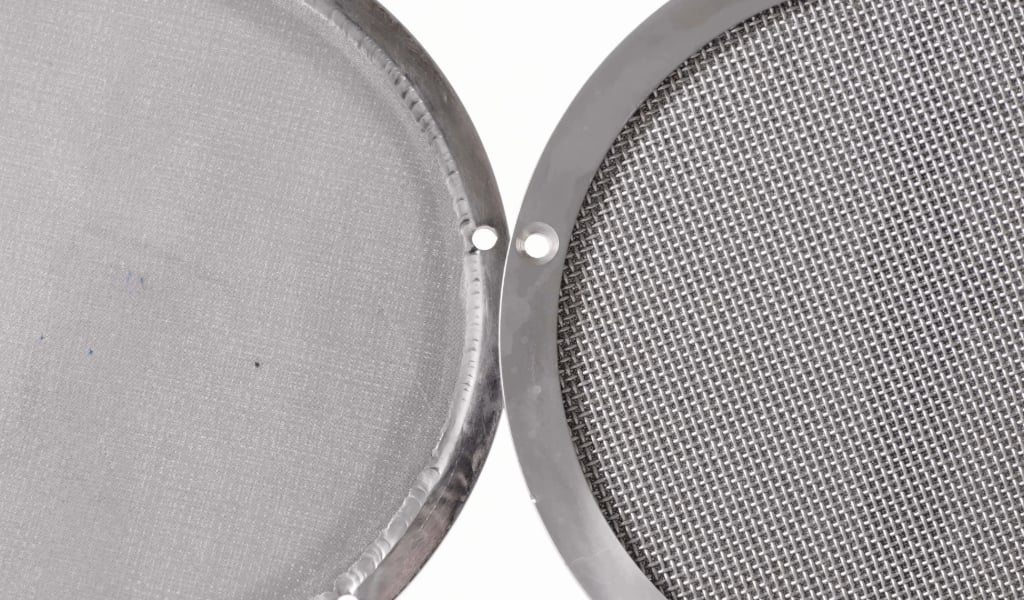


When your Nutsche plate becomes damaged, filtration performance can decline quickly and even contaminate your yield. Even minor imperfections, such as pore blockage, mesh deformation, or wear caused by abrasive materials can disrupt flow, reduce throughput, and compromise product purity, all of which can place stress on manufacturing operations. These issues often lead to inconsistent cake formation, longer cycle times, and elevated contamination risk, making timely repair essential to maintaining stable processing conditions.
Fortunately, W.S. Tyler and Haver & Boecker bring years of hands-on expertise in working with Nutsche filtration systems of virtually any size, shape, or configuration. This extensive experience enables our teams to accurately diagnose damage, determine the ideal repair path, and ensure your equipment returns to peak performance with minimal disruption. Whether we’re incorporating POROSTAR into an existing system, rebuilding a worn laminate, or engineering a fully customized replacement, our repair capabilities go far beyond simple patching.
At W.S. Tyler, our mission is rooted in delivering cleaner, safer, and more reliable filtration solutions, supported by over 150 years of woven-wire innovation. POROSTAR laminates embody this commitment, as it’s engineered for stability under pressure, resistance to deformation, and reliable performance in demanding applications. This same philosophy drives our repair practices, ensuring rebuilt plates maintain the pore consistency, integrity, and chemical compatibility required to keep your operation running confidently.
In this article, we’ll take a clear look at what you should expect when evaluating and repairing a Nutsche filter plate, whether POROSTAR branded or from a competitor. We’ll begin by covering the essential information needed before a repair can begin, then walk through the POROSTAR repair workflow step-by-step, followed by an overview of post-repair cleaning, passivation, and certification procedures. By the end, you’ll understand how the repair process works, how long it typically takes, and how to ensure your restored plate continues to deliver long-term performance.
How To Evaluate Your POROSTAR Plate Before Repair
Evaluating a Nutsche plate prior to repair is the most critical step in ensuring the repair path is safe, accurate, and cost‑effective. A proper assessment helps determine the severity of the damage, whether a spot repair is viable, and what documentation or samples are required before work begins.
1. Start by Identifying Visible Damage and Gathering Plate Details
The evaluation process begins with collecting all available information on the plate, including the material type, layer configuration, dimensions, and previous purchase order (PO) if applicable. Because POROSTAR is a multi‑layer sintered laminate with precisely engineered pore structures, all repair decisions depend on verifying the original specification. POROSTAR laminates are built from tightly bonded woven wire layers that maintain their geometric structure even after sintering, so understanding the construction helps determine whether isolated damage can be patched or whether a larger laminate section must be rebuilt.
In tandem with documentation, customers should provide clear, high-resolution photos of the damaged areas. These images help determine whether the outer layers, middle layers, or only the surface laminate is affected. Often, initial damage may appear severe, but deeper layers remain intact, making a partial repair possible. Conversely, photos may reveal deformation, wear, or chemical damage that penetrates through multiple layers, requiring a more intensive rebuild.
2. Send Any Available Documentation for Verification
If the plate was originally manufactured by W.S. Tyler, the team can often pull legacy PO information to confirm exact specifications, such as alloy type, laminate grade (STANDARD, LIGHT, HIFLO, or COMBI), and pore size requirements. These details make evaluation significantly faster and reduce turnaround time. POROSTAR laminates may contain between 3–6 woven layers depending on the specification, and confirming the correct structure is essential to restoring performance.
If the plate comes from a competitor and/or documentation is unavailable, W.S. Tyler can still reverse engineer the laminate, but the customer must send a clean sample that can be destroyed through analysis. This evaluation is needed to determine layer count, weave type, pore geometry, and alloy composition. Without this information, a repair cannot begin, as mismatched layers would compromise porosity and performance.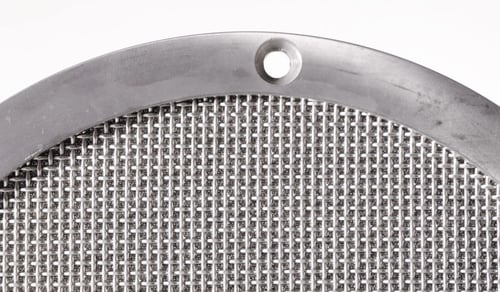
3. Provide Chemical and Safety Details Before Submitting the Plate
Before a sample is physically reviewed, W.S. Tyler must obtain the data sheet for the product or chemical used with the Nutsche plate. This step ensures the repair team understands any potential hazards, especially since POROSTAR plates are widely used in chemical, petrochemical, and pharmaceutical applications where residue may be hazardous or reactive.
In many cases, operators are pressed for time and may not have these details readily available. When this happens, the team may need to remove material from the sample to analyze chemical exposure and ensure safe handling. While this adds a step, it is essential for ensuring both worker safety and compliance with standard repair procedures.
4. Understand Whether the Damage Is Suitable for Spot Repair
Not all POROSTAR damage requires a full plate replacement. A thorough pre‑repair evaluation helps determine whether the plate can be spot‑repaired, which is often faster and more cost‑effective.
However, spot repairs have limitations:
- Repeated welding disrupts local flow patterns over time
- The number of viable patch repairs depends on the application and patch size
- Spot fixes may not restore long‑term stability if deeper layers are compromised
- Over‑repaired plates will eventually require a full laminate replacement
Because POROSTAR’s performance depends on uniform porosity and consistent pore distribution, any repair must maintain structural and flow‑related integrity. Repairs that fail to preserve these characteristics can negatively impact pressure drop, throughput, and cake formation.
For facilities wanting to minimize downtime, W.S. Tyler recommends having a backup plate available so production can continue while repairs are performed.
The POROSTAR Repair Workflow: Step-By-Step
Repairing a Nutsche plate requires a controlled, methodical process that ensures the restored plate meets the original performance expectations of stability, porosity, chemical compatibility, and structural integrity. Thanks to the engineered multi‑layer sintered laminate design of POROSTAR, repairs are highly technical and must preserve the geometry and pore distribution across all layers.
1. Receiving and Reviewing All Provided Information
Once the evaluation phase is complete, the repair workflow begins with a detailed review of the documentation and photos provided. This includes:
- Plate material (e.g., 316L stainless steel, Hastelloy C22)
- Laminate construction (STANDARD, LIGHT, HIFLO, COMBI)
- Layer configuration (3–6 woven layers depending on spec)
- Plate thickness and diameter
- Previous purchase order (PO) or production record
- Application‑specific operating conditions
Understanding these details ensures the repair team can accurately reconstruct or repair the laminate. If the customer does not provide PO information and the plate is from a competitor, the team prepares for reverse‑engineering steps, which may require destructive sample analysis.
2. Reverse Engineering (If Required)
If PO information or drawings are unavailable, the repair team must analyze the sample to determine:
- Layer count
- Mesh weave types
- Pore geometry
- Alloy composition
This reverse‑engineering process often involves destroying a small portion of the plate to inspect internal layers. POROSTAR layers must be replicated to ensure restored porosity matches original performance.
Without this accuracy, repaired plates may experience uneven flow, unexpected pressure drop, or premature failure.
3. Preparing the Plate for Repair (Cleaning + Safety Requirements)
Before physical repair begins, the plate must undergo a pre‑cleaning assessment, which requires the customer to provide the chemical/product data sheet for safe handling. This step helps to ensure that no reactive chemicals or hazardous residues remain, and that proper safety and cleaning procedures can be applied.
If documentation cannot be provided in time, the repair team may need to remove material from the plate for chemical analysis, as this ensures compliance and worker safety. This aligns with standard industrial repair procedures for filtration components exposed to chemical processes.

4. Executing the Repair: Spot Fix, Partial Replacement, or Full Laminate Rebuild
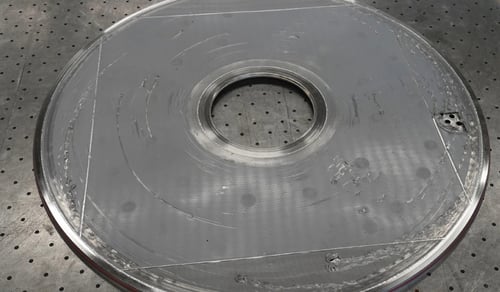
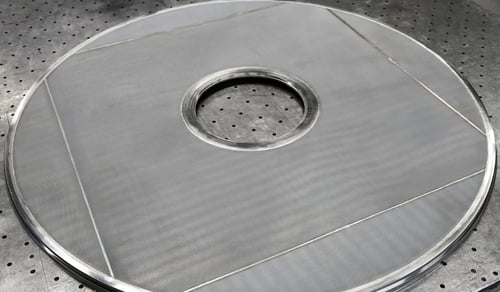
Spot Repair (localized Damage)
Spot repairs are possible when damage is small and does not penetrate multiple layers, specifically the filter layer. The repair team removes the affected area and welds in a matching laminate section.
Some important considerations:
- Heat from welding may alter local pore structure over time
- The number of viable spot repairs is limited
- Flow uniformity may be slightly affected based on application
- Best used for small abrasions or chemical etching defects
Partial Laminate Replacement (Moderate Damage)
When deeper laminate layers are affected, technicians cut out the damaged section and integrate a new section of POROSTAR laminate.
Some benefits include:
- Faster and cheaper than a full rebuild
- Restores structural stability
- Maintains original flange ring
This method is widely used for extending service life while minimizing downtime.
Full Laminate Repair (Severe Damage)
If the laminate is severely deformed, corroded, or worn, the woven wire laminate is completely replaced, but the original flange ring is reused.
Advantages:
- Full restoration of pore geometry
- Maximum structural reliability
- More sustainable and cost-effective than total replacement
This is the most common approach when repairing heavily worn POROSTAR plates used in abrasive or corrosive environments.
Maintaining precise fixing and anchor points during a rebuild is critical to both safety and long-term performance. Even small deviations can prevent the plate from sitting correctly in the Nutsche dryer system, which can lead to improper sealing, uneven loading, vibration-related wear, or even damage to the vessel itself. For this reason, W.S. Tyler and Haver & Boecker ensure all fixing points match the original specifications exactly, allowing the repaired plate to fit securely and operate as intended.
5. Post-Repair Inspection and Reassembly
After the physical repair work is complete, the plate undergoes:
- Dimensional verification
- Porosity checks
- Visual inspection under magnification
- Structural integrity testing
- Weld quality review and certification
This step ensures the repaired laminate functions within the same operational parameters as the original POROSTAR design.
6. Estimated Turnaround Time
A typical spot repair takes 2-3 weeks, assuming all required documents are provided upfront. More complex repairs, such as full laminate construction or reverse-engineering competitor plates, can extend this timeline up to 6-8 weeks or even longer depending on the damage and complexity of your plate configuration.
This aligns with industry-standard expectations for sintered woven-wire laminate repairs, where safety checks, documentation, precision welding, and post-repair treatment add necessary lead time.
Keeping Your POROSTAR Plate Performing at Its Best
Repairing a Nutsche filter plate is a detailed, multi-stage process, and by now you’ve seen how each step plays a critical role in restoring performance. Understanding what information is required, how plates are reverse engineered when documentation is missing, and what determines whether a plate receives a spot fix, partial laminate replacement, or full reconstruction helps you make informed decisions that can help to reduce your systems downtime and extend equipment life. With POROSTAR’s multi-layer design engineered for durability and predictable porosity, a well-executed repair allows your plate to continue delivering consistent, high-quality filtration results.
As you move forward, the next step is ensuring your plate is evaluated as soon as damage is detected. Providing complete details, such as material, layer configuration, PO information, application conditions, and chemical safety data, allows the repair team to work both efficiently and safely. In cases where documentation isn’t available, sending a clean sample for assessment ensures the team can accurately determine the plate’s construction. With this information on hand, you can expect a smoother repair process and a clearer understanding of timelines, repair type, and long‑term viability.
At W.S. Tyler, we remain committed to supporting cleaner, safer, and more reliable filtration operations, an approach strengthened by more than 150 years of woven wire expertise. Whether we’re restoring pore geometry through full laminate replacement or performing precise spot repairs to extend service life, our focus is always on delivering solutions that protect your process integrity and keep your systems running smoothly.
Looking to continue building your understanding of POROSTAR and how it can best fit into your Nutsche dryer system? Check out our article below: