






Microplastics have become nearly unavoidable in today’s households, showing up in tap water, wastewater streams, and even the air inside the home. With microplastics present in as much as 94% of U.S. tap water, homeowners are increasingly searching for reliable filtration solutions that can remove particles as small as 5 microns.
This growing concern has made the selection of the right filter media, particularly when choosing between woven wire mesh options, more important than ever.
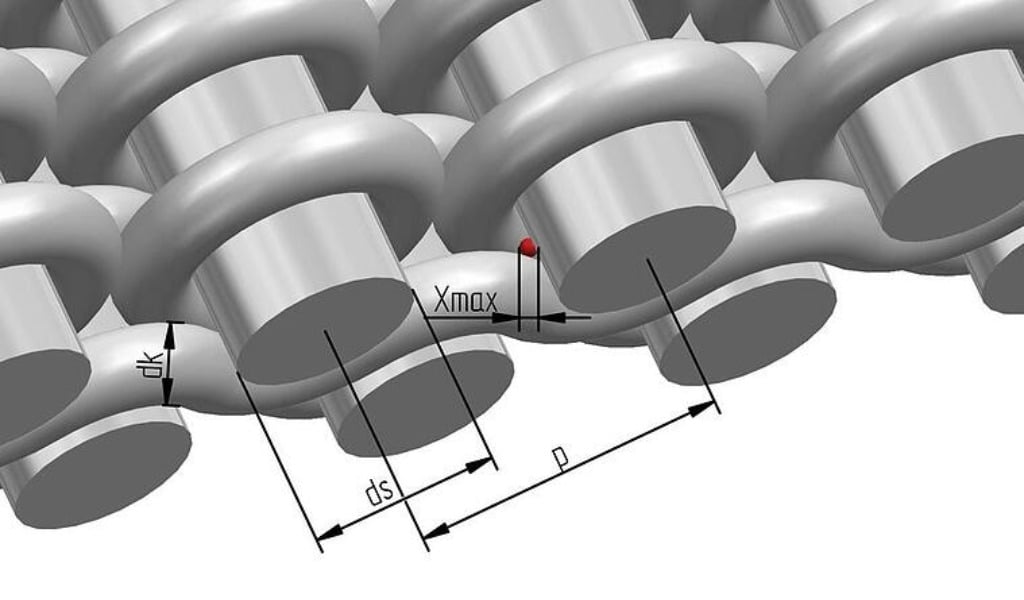
As households adopt point‑of‑use filtration systems capable of trapping microscopic contaminants, two woven wire mesh types often rise to the top: Plain Weave and RPD HIFLO. Both offer unique advantages depending on the application. Plain Weave delivers dependable throughput and predictable filter finenesses, while RPD HIFLO leverages engineered 3D pore geometry to offer exceptional stability, extended service life, and superior dirt‑holding capacity. These characteristics become critical in systems where microplastic loads fluctuate and environmental debris can easily clog simpler media.
At W.S. Tyler, our mission has always been to help create cleaner, safer environments through reliable, precision‑engineered woven wire mesh, which is an expertise we’ve honed for more than 150 years. As concerns around microplastic exposure continue to rise, we apply this legacy to support filtration designs that help homeowners reduce contamination at the point of use. Our mesh solutions are engineered for resilience, consistency, and long‑term performance, aligning with the growing demand for healthier, more sustainable household water systems.
In this article, we’ll compare the benefits of Plain Weave and the strengths of RPD HIFLO in household microplastic filtration, explore how each performs under different water conditions, and provide a clear, practical breakdown to help you determine which mesh suits your specific setup. By the end, you’ll have a confident understanding of where each mesh excels and how to choose the right media for cleaner, safer household water.
The Benefits of Plain Weave for Household Microplastic Filtration
Plain weave remains one of the most widely used woven wire mesh structures in filtration because of its predictable filter finenesses and high throughput, making it a practical option for handling household water conditions where maintaining sufficient flow is essential. Its simple 2D geometry allows water to move through with minimal resistance compared to more complex filter cloths, offering a consistent and efficient starting point for capturing larger microplastic particles.
One of Plain Weave’s biggest strengths is its flow performance. In many household setups, such as gravity‑fed systems, low‑pressure shower filters, or early-stage sediment filters, maintaining throughput is as important as capturing contaminants. Because Plain Weave does not incorporate layered or 3D geometries, it offers less resistance to water movement, ensuring that filtration does not overly restrict pressure or performance. This makes it a favorable choice for applications where consistent flow and convenience outweigh the need for enhanced structural stability, especially considering that overall stability is ultimately determined by the wire diameter used in the mesh.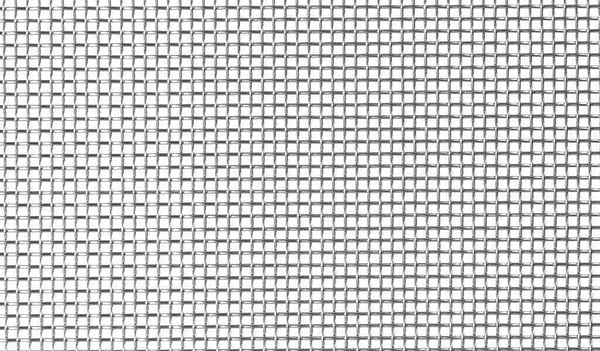
However, Plain Weave does have limitations that homeowners should consider. Compared to engineered filter cloths, it offers less structural stability and lower dirt‑holding capacity. While this does not diminish its effectiveness as a throughput‑friendly option, it does highlight the importance of matching Plain Weave to the right stage of filtration, which is typically early in the treatment process or in systems dealing with relatively clean feed water.
With its blend of simplicity, dependable flow, and accessible cost, Plain Weave stands out as a strong option for households seeking to reduce microplastic exposure without compromising day‑to‑day usability. When applied strategically, it supports both performance and longevity in modern residential filtration systems.
Strengths of RPD HIFLO Filter Cloth with Microplastic Contamination
RPD HIFLO stands out in microplastic filtration because of its engineered three‑dimensional pore geometry, which was developed to overcome the performance limitations of conventional woven metal cloth. This 3D structure effectively doubles the number of pores within a single filter element, dramatically increasing the available filtration pathways without compromising integrity. The result is a mesh that provides much greater stability, uniformity, and dimensional precision than traditional 2D weaves, which is an essential advantage when filtration requirements involve particles as small as 5 microns or when systems must maintain structural integrity under fluctuating residential water conditions.
One of the most significant strengths of RPD HIFLO in household microplastic applications is its exceptional dirt‑holding capacity. The depth‑structured design prevents rapid buildup by allowing microplastic fragments and environmental debris to lodge deeper within the media instead of accumulating directly on the surface. This slows down clogging, reduces pressure spikes, and enables households to operate filtration systems longer between cleaning cycles, which is an especially valuable benefit in areas where incoming water contains varied particulate loads.
Interested in discovering more about the benefits of stainless steel mesh vs synthetic filtration in microplastic filtration? Learn more in our article below:
These structural advantages directly contribute to RPD HIFLO’s extended service life, providing a durable, robust filtration layer capable of withstanding the mechanical stresses common in modern residential systems. Its uniform pore geometry supports consistent performance throughout the mesh’s lifespan, while its corrosion‑resistant construction improves resistance to moisture, temperature fluctuations, and chemical exposure.
Such longevity is particularly beneficial for homeowners integrating filtration into appliances or point‑of‑use devices, where long-term reliability and low maintenance are critical, and because RPD HIFLO uses significantly larger wire diameters, it can be mechanically cleaned, such as with brushes, which is something that is far more limited with traditional plain weaves.
Combined, these strengths make RPD HIFLO an advanced, high‑performance choice for homeowners needing a mesh that balances precision, durability, and consistency against microplastic contamination. Its engineered structure doesn’t just filter more effectively, as it reduces maintenance, extends filter lifespan, and delivers dependable results in environments where water quality conditions are unpredictable.
Which Mesh is Best for Your Household Filtration Setup?
Choosing the right mesh for household microplastic filtration depends on how your system balances flow, maintenance expectations, particle loads, and overall durability needs. For setups where maintaining water pressure and throughput is the top priority, such as gravity‑fed units, basic point‑of‑use filters, or low‑pressure home systems, Plain Weave is often the most suitable choice. Its straightforward 2D geometry offers low resistance to water movement, supporting efficient flow even when handling larger microplastic fragments.
On the other hand, households dealing with varied particulate levels, fluctuating water quality, or the need for longer service intervals may find RPD HIFLO to be the best fit. Its engineered 3D pore geometry effectively doubles the number of pores within a single filter element, giving it superior uniformity and stability compared to conventional weaves. This structure also enhances dirt‑holding capacity and slows down rapid clogging, allowing homeowners to go longer between cleaning cycles and reducing interruptions to everyday water use.
These qualities make RPD HIFLO especially useful for systems capturing fine microplastics as small as 5 microns, aligning with its precise pore size capabilities.
While plain weave can be a strong choice for systems that prioritize flow, it’s important to recognize its limitations in terms of available pore sizes. Plain weave configurations are offered only at 25 microns and above, while RPD HIFLO offers pore sizes ranging from 5 - 40 microns, allowing it to target finer particles increasingly found in household water systems.
Ultimately, the best choice often comes down to system priorities. If your primary goal is to maintain strong flow while filtering out larger microplastics, Plain Weave remains a dependable, cost‑effective option. If you're looking for stability, improved dirt‑holding, finer microplastic capture, and longer operational life, RPD HIFLO offers clear advantages.
Next Steps for Selecting a Microplastic Filtration Mesh
Choosing between Plain Weave and RPD HIFLO ultimately comes down to understanding how each mesh behaves under household filtration conditions and how closely their strengths align with your water quality needs. Plain Weave provides strong baseline performance with high throughput and dependable filter finenesses, making it valuable for capturing larger microplastic fragments and maintaining flow. RPD HIFLO, on the other hand, delivers greater stability, deep dirt‑holding capability, and a longer service life thanks to its engineered 3D pore geometry and precise pore size control. Together, these factors give homeowners a clear understanding of how each mesh contributes to cleaner water.
As you assess next steps, it may help to evaluate your home’s typical water conditions, which include sediment load, pressure levels, and the expected size range of microplastics entering your system. If maintaining flow and cost-effectiveness are priorities, Plain Weave may be the right fit. If your system requires more robust performance, longer intervals between cleaning, or a stronger barrier against fine microplastics, RPD HIFLO offers measurable advantages.
At W.S. Tyler, our commitment to supporting cleaner homes and safer water has guided more than 150 years of woven wire mesh innovation. That dedication drives our ongoing work to help households better understand microplastic contamination and choose filtration solutions that deliver long-term reliability and improved environmental health. Whether your goal is improved water quality, reduced exposure, or more sustainable filtration practices, the right mesh selection plays a key role in building a healthier home.
Looking to discover more about how woven wire mesh benefits plastic-injection molded production, especially in everyday appliances? Check out our article below: