




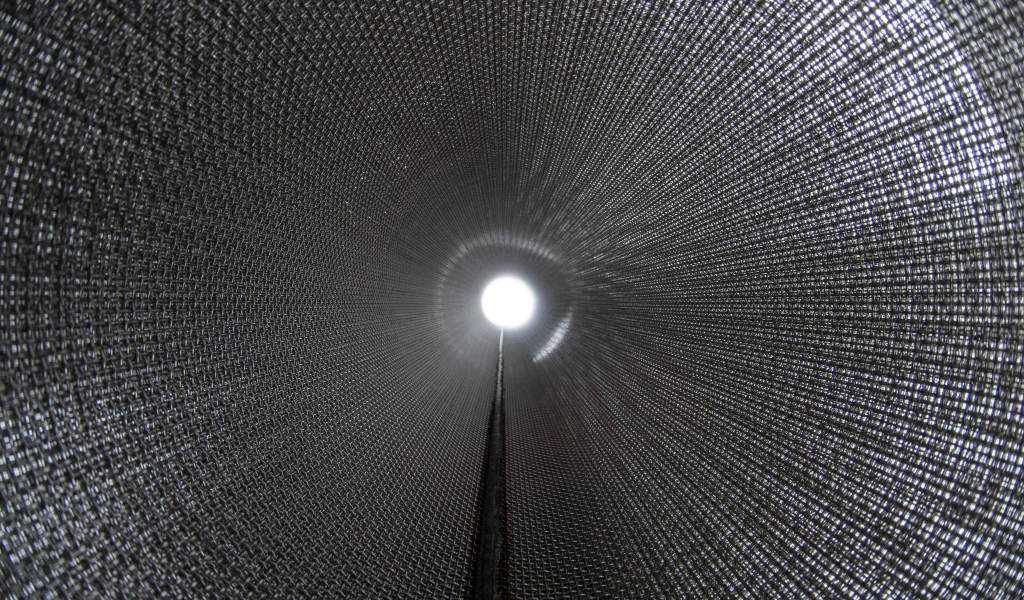


Sand control remains one of the most persistent challenges in downhole and sand screening applications. When formation sand migrates into a wellbore or production system, it can lead to erosion, plugging, reduced flow efficiency, and costly interventions. Operators are often forced to balance sand retention with flow, performance, and the consequences of choosing the wrong screening technology can extend well beyond initial completion, impacting your equipment life, production rates, and overall well economics.
To address this challenge, the industry relies on screening technologies designed to retain formation sand while allowing fluids to flow as freely as possible. Two of the most commonly specified options are woven wire mesh laminates, such as W.S. Tyler’s POROSTAR, and wedge wire or wrap wire screens. While both serve the same fundamental purpose, they differ significantly in how they manage pore structure, flow behavior, and long-term performance in environments where sand size, distribution, and flow dynamics can vary over time.
At W.S. Tyler, our approach to sand screening is grounded in delivering solutions that help create cleaner and safer processes for critical applications. With more than 150 years of experience engineering woven wire solutions, we focus on precision, consistency, and reliability, especially in demanding environments where filtration accuracy and durability directly affect operational success. That experience informs how we evaluate screen design, material selection, and manufacturing methods for real-world performance.
In this article, we’ll take a practical look at how woven wire mesh laminates compare to wedge/wrap wire screens for sand control and sand screening applications. We’ll start with the basics of sand control screening in downhole environments, examine why laminated woven wire designs excel at controlling fine and variable sands, and outline key limitations of wedge/wrap wire screens. The goal is to help you better understand which technology aligns with your application requirements so you can make confident, performance-driven screen selection decisions.
Sand Control Screening Basics for Downhole Applications
At its core, sand screening is about managing the movement of formation solids without restricting fluid flow. In downhole and sand control applications, screens are placed across sand-producing intervals to retain formation particles while allowing oil, gas, or water to pass with minimal pressure loss.
The effectiveness of any sand screen depends on how well it balances sand retention, flow capacity, and resistance to plugging or erosion, especially as reservoir conditions change over time.
One of the most important starting points in screen selection is understanding particle size distribution (PSD) of the formation. Screens are not designed to block every sand grain; instead, they are sized to retain the larger, damaging particles while allowing a controlled amount of fine material to pass or stabilize naturally. Screens that are sized too tightly are more prone to plugging and localized erosion, while oversized openings allow excessive sand production that can damage equipment. This is why modern sand screening relies on precise pore or slot geometry rather than simple “open area” alone.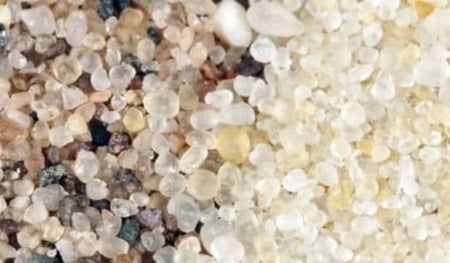
Beyond particle retention, flow behavior through the screen plays a major role in performance. As fluids pass through a screen, velocity increases at the opening, which can accelerate erosion or promote fine migration if not properly managed. Designs that distribute flow evenly across the screening surface help reduce high-velocity hot spots and pressure drop, improving long-term reliability.
This principle is especially important in variable flow conditions, such as drawdown changes, water breakthrough, or production ramp-ups.
Lastly, downhole screens must withstand harsh mechanical and chemical environments. Collapse resistance, tensile strength, corrosion resistance, and fatigue performance are all essential factors, particularly in deeper or more aggressive wells. Modern sand screens are often evaluated not just on filtration efficiency, but on their ability to maintain consistent geometry under load and resist deformation that could compromise sand control performance. These fundamentals set the stage for why different screen technologies perform very differently in real-world sand screening applications.
How Woven Wire Laminates Excel at Sand Control
Woven wire mesh laminates outperform single-layer screening technologies because they are engineered to provide stable, repeatable pore geometry rather than relying on slot spacing alone. By layering multiple woven wire meshes with different functions, such as filtration, support, and protection, laminated screens create a controlled flow path that remains consistent under pressure.
This is especially important in sand control applications where fluctuating drawdown, variable sand sizes, and long production intervals can quickly expose weakness in less controlled designs.
One of the key advantages of woven wire laminates is their ability to retain fine and poorly sorted sands without excessively restricting flow. Diffusion-bonded or sinter-bonded laminated meshes maintain fixed openings, even under high differential pressure, which helps prevent pore deformation and sand breakthrough over time. Unlike single-opening designs, the multi-layer structure distributes load across the screen, reducing the risk of localized failure and helping ensure more uniform sand retention across the entire production interval.
Flow behavior is another area where woven wire laminates excel. Because pores are evenly distributed and flow is spread across multiple layers, laminated screens tend to reduce high-velocity flow channels that contribute to erosion and premature plugging. This controlled flow profile lowers pressure drop, minimizes fines migration, and supports sustained production rates, particularly in applications where flow conditions evolve throughout the life of the well rather than remaining constant.
Want to learn more about the alloys available so you can begin designing the perfect sand control screens? Check out the article below to learn more:
Laminated woven wire screens also offer significant flexibility in screen design and customization. Mesh weaves, wire diameters, layer counts, and alloys can be selected and combined to match specific formation characteristics, chemical exposure, and mechanical demands. This allows engineers to fine-tune filtration performance for standalone screens, gravel-pack systems, or high-flow sand screening applications without compromising structural integrity.
Finally, durability plays a major role in why woven wire laminates are often specified for challenging sand control environments. When properly bonded laminated meshes behave as a single, unified structure rather than independent layers. This construction helps maintain dimensional stability during installation, resists vibration and fatigue during production, and supports long-term performance in corrosive or high-temperature conditions. The result is a sand screening solution designed not just for initial success, but for reliability over the full-service life of the well.
Limitations of Wedge/Wrap Wire in Sand Control
Wedge or wrap wire screens are widely used in sand control due to their mechanical strength and relatively high open area, but their performance is closely tied to slot-based filtration, which introduces several important limitations. Unlike pore-defined filtration media, wedge wire screens rely on linear slot openings formed between wrapped wires. These slots provide effective retention for well-sorted sands but can struggle when formation sand sizes vary or fines are present, increasing the likelihood of sand invasion or inconsistent retention over time.
One of the most common challenges with wedge/wrap wire screens is sensitivity to particle size distribution. Screens sized on average grain diameter can allow smaller yet still damaging particles to pass, especially in reservoirs with poorly sorted or shifting sands. Once fines begin migrating through the slots, erosion can occur at high-velocity flow points, which may gradually enlarge slot openings and degrade sand control performance.
Slot geometry also affects long-term flow behavior. While wedge wire designs promote high initial flow capacity, flow is concentrated at each slot opening rather than being distributed uniformly. This can create localized high-velocity regions that increase erosion risk and contribute to uneven loading across the screen. Over time, these effects may lead to premature screen damage or reduced effectiveness, particularly in applications where production rates fluctuate or ramp up beyond initial design assumptions.
Installation and deformation tolerance present additional considerations. Although wedge wire screens offer strong collapse resistance, they are still susceptible to mechanical distortion during handling or under uneven formation loading. Slot spacing can be altered if the screen deforms, which directly impacts sand retention capability. Unlike laminated filtration media with fixed pore structure, any distortion in a slot-based design changes how the screen performs in service.
Finally, wedge/wrap wire screens offer limited filtration customization compared to laminated woven wire designs. Slot sizes are available in discrete increments, making it more difficult to fine-tune filtration for marginal sand sizes or highly sensitive formations. While they remain a suitable solution for specific conditions, such as coarse, uniform sands or gravel-packed completions, their design constraints can become limiting factors in wells where sand characteristics, flow conditions, or production strategies change over time.
Selecting the Best Sand Screening Technology
Choosing between woven wire mesh laminates and wedge/wrap wire screens ultimately comes down to how well each technology aligns with formation characteristics, flow conditions, and long-term production goals. As we’ve seen, sand screening performance is not defined by open area alone, as it depends on pore or slot stability, resistance to erosion, and the ability to maintain consistent filtration as reservoir conditions evolve. Selecting a screen that can manage sand without sacrificing flow or reliability is critical to protecting both downhole equipment and overall well performance.
Moving forward, screen selection should start with a clear understanding of sand particle size distribution, expected drawdown changes, and completion strategy. Applications involving fine or poorly sorted sands, changing production rates, or long service life expectations often benefit from filtration media with fixed, repeatable geometry. More uniform, coarse sands or gravel-packed completions may allow for simpler slot-based designs when properly engineered. Taking the time to evaluate these variables upfront can significantly reduce the risk of plugging, erosion, or costly workovers later in the well’s life.
At W.S. Tyler, our focus remains on supporting cleaner and safer processes by providing screening solutions engineered for consistency, durability, and long-term performance. With more than 150 years of woven wire expertise, we understand that sand control isn’t a one-size-fits-all decision but instead a balance of precision filtration, mechanical integrity, and real-world operating conditions. That experience drives how we design and manufacture laminated woven wire solutions that perform reliably where traditional approaches can fall short.
Want to learn more about oil well sand control screens and how they can fit into your system? Check out the article below to learn more: