






High-purity processes such as those in pharmaceuticals, fine chemicals, and specialty materials, demand absolute control over contamination and consistency. This is still an essential challenge that many operations struggle with using traditional filtration methods. Open systems expose products to environmental contaminants, increase operator risk, and compromise solvent recovery. These issues not only threaten product integrity but also regulatory compliance, making purity-critical manufacturing a complex and costly endeavor.
Nutsche filter dryers can provide an excellent solution for these challenges based on their application. Designed as closed systems, they enable solid-liquid separation under vacuum or pressure while minimizing exposure to contaminants. Their ability to integrate filtration, washing, and drying in a single vessel reduces transfer points, preserves product integrity, and ensures consistent purity. Whether handling hazardous compounds or moisture-sensitive materials, Nutsche filter dryers deliver the containment and precision required for high-purity applications.
At W.S. Tyler, we’ve spent over 150 years engineering woven wire mesh solutions that make industrial processes cleaner, safer, and more efficient. Our commitment to quality ensures that every component we provide supports the highest standards of purity and reliability. By combining decades of expertise with innovative design, we help manufacturers overcome filtration challenges and achieve consistent, compliant results in demanding environments.
In this article, we’ll explore why Nutsche filter dryers are essential for high-purity processes. We’ll start by breaking down what makes these filters ideal for applications where contamination control and product integrity are non-negotiable. Next, we’ll examine how their design ensures consistent purity and compliance with industry standards. Finally, we’ll outline key factors to consider when implementing Nutsche filter dryers and filter plates into your operation so you can make informed decisions that optimize performance and safety.
What Makes Nutsche Filter Dryers Ideal for High-Purity Processes?
One of the defining features of Nutsche filter dryers is their fully enclosed design. Unlike open filtration systems, Nutsche filter dryers operate in a sealed environment, preventing airborne contaminants and minimizing operator exposure. This closed configuration is critical in industries such as pharmaceuticals and fine chemicals, where even trace impurities can compromise product integrity and regulatory compliance.
Nutsche filter dryers streamline multiple steps such as filtration, washing, and drying, all within a single vessel. This integration reduces transfer points, which are common sources of contamination in traditional setups. By washing and drying the filter cake in place, manufacturers can achieve higher purity levels while saving some time and reducing your equipment footprint.
High-purity processes often involve aggressive chemicals or sensitive compounds. Nutsche filter dryers are available in materials such as 316L stainless steel, C-22 Hastelloy, and many other high-grade alloys, all chosen for their corrosion resistance and cleanability. These materials meet stringent GMP and ASME BPE standards, ensuring compliance and long-term durability in purity-critical environments.
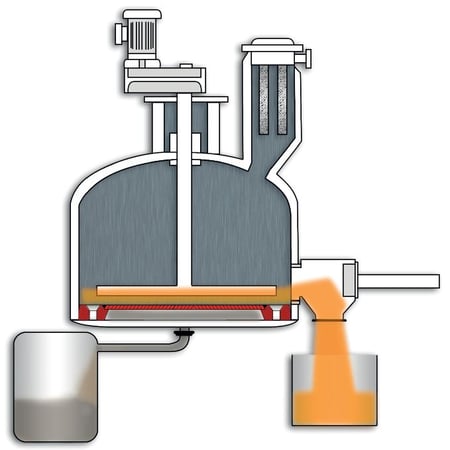
Operating under pressure or vacuum accelerates filtration and enhances solvent recovery. Pressure-driven systems allow faster liquid discharge, while vacuum drying reduces residual moisture in the filter cake. This capability is particularly valuable in pharmaceutical crystallization and specialty chemical production, where precise moisture control is essential for product quality.
Nutsche filter dryers are often the final step before packaging in high-purity workflows. Their ability to deliver consistent, contaminant-free solids or liquids makes them indispensable for meeting strict purity standards. By combining containment, efficiency, and versatility, Nutsche filter dryers provide a reliable solution for processes where quality cannot be compromised.
How Nutsche Filter Dryers Ensure Consistent Purity
Nutsche filter dryers excel because they allow operators to manage pressure, temperature, and vacuum within a sealed environment. This level of control ensures that each batch meets strict purity specifications without relying on multiple transfer steps.
One of the biggest threats to purity is cross-contamination during product transfers. Traditional filtration setups often require moving material between vessels for washing and drying, increasing exposure to airborne particles and operator handling. Nutsche filter dryers eliminate the risk by integrating all of the steps like filtration, washing, and drying, into a single closed system, reducing contamination points and improving batch integrity.
Purity isn’t achieved by filtration alone. Residual solvents and impurities must be removed effectively or you risk contamination to your entire batch, and specialized Nutsche filter plates make this possible through uniform washing and vacuum drying. By applying wash liquids evenly across the filter cake and then drying under controlled vacuum, these filters ensure that the final product meets stringent moisture and cleanliness requirements.
Looking to dive deeper into filtration best practices? Check out our blog article below to discover best practices for filter design:
High-purity processes often operate under cGMP and FDA guidelines, where documentation and repeatability are critical. Nutsche filter dryers and by extension the filter plates being used, such as POROSTAR multi-layer laminates, are designed to meet these standards, offering cleanable surfaces, corrosion-resistant materials, and automation options that support validation. This compliance-driven design helps manufacturers avoid costly deviations and maintain trust with regulatory bodies.
In the industries where purity defines product value, such as pharmaceuticals and specialty chemicals, variability can lead to rejected batches and financial losses. Nutsche filter systems provide the reliability needed to maintain consistent results across multiple production cycles, making them a cornerstone of high-purity manufacturing strategies.
Factors to Consider When Using Nutsche Filter Dryers and Filter Plates
The filter media is the heart of any Nutsche filtration process. Its selection should be based on slurry characteristics such as particle size, chemical compatibility, and cake compressibility. For fine particles, a tightly woven cloth or sintered metal plate is ideal, while coarser solids may require a more open weave for faster flow.
Using the wrong media can lead to poor separation, extended cycle times, and even contamination, often requiring the entire batch to be discarded.
The efficiency of a Nutsche filter plate depends heavily on the quality of the filter cake and the filter media being used. A thin, uniform cake promotes faster filtration and easier washing, while an uneven or overly thick cake slows down the process and could even damage the filter. Factors like operating pressure, slurry distribution, and agitation during washing all influence cake structure.
Proper control of these variables ensures consistent purity and throughput.
Pressure and temperature directly impact filtration speed and product quality. Applying pressure accelerates liquid removal, while vacuum assists in drying. However, excessive pressure can damage the filter plate, and extreme temperatures may affect solvent viscosity or cake integrity. Always operate within recommended ranges to maintain efficiency and equipment longevity.
High-purity processes demand rigorous cleaning protocols. Nutsche filter plates should be designed for easy disassembly and cleaning, with smooth internal surfaces and Clean-In-Place/Sterilize-In-Place (CIP/SIP) systems where possible. Regular inspection of seals, filter plates, and media prevents contamination and extends equipment life.
For industries governed by standards, compliance is non-negotiable. Materials of construction such as 316L stainless steel or C-22 Hastelloy, must resist corrosion and support sterilization. Additionally, closed-system operation minimizes operator exposure to hazardous solvents, ensuring both safety and regulatory adherence.
Next Steps for Implementing Nutsche Filters
We’ve explored why Nutsche filter dryers and POROSTAR filter plates are indispensable for high-purity processes, from their closed-system design to their ability to integrate filtration, washing, and drying. These features make them a cornerstone for industries where contamination control and compliance are critical.
If your current filtration setup struggles with purity, efficiency, or regulatory requirements, it may be time to evaluate Nutsche filtration. Start by assessing your process needs such as particle size, chemical compatibility, and throughput goals, and determine how a closed-system solution can address these challenges.
POROSTAR Nutsche plates are far more serviceable than many realize. Whether the damage is minor or severe, there are structured repair methods available. You can read the full breakdown in our in-depth article here.
At W.S. Tyler, we’ve spent over 150 years helping manufacturers achieve cleaner, safer, and more efficient operations. Our woven wire mesh solutions are engineered to meet the highest standards of purity and reliability, ensuring your processes remain compliant and cost-effective.
Want to learn more about the importance of the filtration media used in Nutsche filters? Check out our blog article below to discover more: