






Increasing demands for high-throughput and cost-effective separation processes can put pressure on industrial filtration systems. Nutsche filter plates, commonly used in chemical, pharmaceutical, and food-grade processes, may struggle with slow cycle times, clogging, delamination, or inconsistent cake formation under such workloads. Identifying these pain points is crucial for improving efficiency and meeting producing targets.
The solution lies in optimization of every aspect that you can, from plate design and filter media selection to operation. Improving filtration efficiency is about the clarity of the filtrate, the durability of the equipment, and by reducing your downtime through proactive maintenance and a smart use of filter aids.
At W.S. Tyler, our mission is to deliver woven wire mesh filter media that helps to create cleaner and safer filtration processes, backed by over 150 years of industry expertise. We strive to equip manufacturers with reliable, high-performance filters that optimize your system uptime, reduce contamination, and enhance overall product quality.
In this article, we’ll explore how Nutsche filter plates work and their critical role in filtration, examine the key stages that influence efficiency, and share actionable tips and best practices to optimize your filtration process.
Nutsche Filter Plates and Their Role in Filtration
Nutsche filter plates are central to batch solid-liquid separation systems, combining filtration, washing, drying, and cake discharge within a sealed vessel. At the heart of this process is a support plate, typically clad with filter media like stainless-steel mesh or synthetic cloth. Through vacuum or pressure, the slurry passes through this media, capturing solids and producing a clarified filtrate.
Efficiency in Nutsche filter systems hinges on the seamless interplay between the structural design of the filter plate and the chosen media. The plate must be robust enough to sustain pressure differentials, facilitate uniform cake formation, and enable easy discharge. Meanwhile, the media impacts filtration rate, cake buildup, and filtrate clarity. Multi-layer laminates such as POROSTAR strike this balance with a precise control of both flow and particle capture.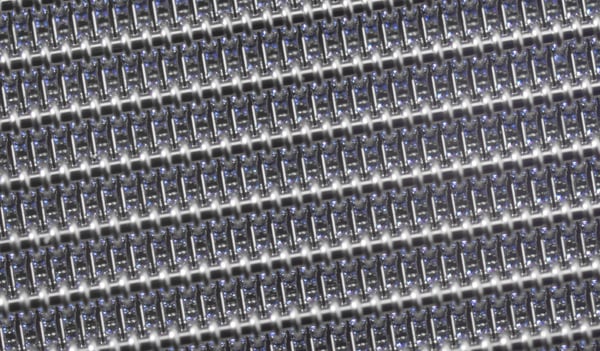
Filtration performance is also shaped by process parameters:
- Operating mode (vacuum vs. pressure): Vacuum suits viscous slurries and gentle processing, while pressure accelerates throughput and aids in drying.
- Cake formation dynamics: A well-formed filter cake with uniform thickness and porosity prevents blockage and maintains a high flow rate.
- Temperature and solid characteristics: Temperature influences slurry viscosity while particle size and compressibility dictate cake properties and filtration speed.
The efficiency of a Nutsche filter system is about finding a harmony between filter plate design, media selection, and operational control. Understanding these fundamentals is crucial before diving into advanced strategies.
Factors That Influence Nutsche Filter Plate Efficiency
Achieving maximum efficiency with Nutsche filter plates starts with understanding the elements that impact performance. One of the most critical factors is the filter media and plate design. Whether it’s a multi-layer laminate such as POROSTAR or a synthetic cloth, the media you choose determines how well solids are captured and how quickly liquid passes through.
A tighter weave offers superior clarity for fine particles, while a more open weave speeds up filtration for larger solids.
Equally important is the structural integrity of the plate itself. It must withstand pressure differentials, promote even cake formation, and allow for smooth discharge without warping or stress.
Another key consideration is cake formation. A uniform, porous cake ensures consistent flow and prevents clogging, which can drastically slow down the process. Techniques such as pre-filtration or allowing slurry to settle before filtration can help remove coarse particles early, reducing the risk of blockage and improving overall efficiency.
Operating conditions also play a major role. Choosing between vacuum and pressure filtration depends on your slurry characteristics and production goals. Vacuum systems are ideal for viscous or heat-sensitive materials, while pressure systems accelerate throughput and drying times.
Temperature control is equally important, as higher temperatures can reduce viscosity and speed up filtration, but they must be managed carefully to avoid damaging the filter media or altering cake properties.
Looking to learn more about the importance of high-purity standards in Nutsche filter dryers? Read more in our article below:
Process discipline cannot be overlooked. Overloading the filter plate or skipping pre-filtration steps often leads to uneven cakes, increased differential pressure, and early wear on the media.
Selecting a filter that matches the chemical properties of your slurry is also essential to prevent contamination or degradation.
Finally, maintenance and discharge management are vital for long-term efficiency. Regular inspections of gaskets, seals, and filters can help you to prevent surprise system shutdowns. Cleaning after each cycle, especially when handling sticky or viscous slurries, ensures a consistent performance. Automated discharge systems, such as agitators or gas knives, can further streamline operations by removing residual cake completely, reducing manual intervention and improving cycle times.
Tips for Optimizing Your Filtration Process
Automation of both filtration and discharge can drastically improve consistency and throughput. Modern agitated Nutsche filter dryers equipped with PLCs and SCADA connectivity deliver precise, repeatable control over pressure, temperature, and agitation, reducing manual errors and cutting down on cycle times.
Equipping your system with an automated side‑discharge valve and agitator ensures rapid and reliable cake removal. Incorporating a “gas-knife” high-velocity gas stream further helps sweep residual product off the filter media, helping to enhance yield and reduce downtime.
Next, implementing a Cleaning-In-Place (CIP) or Sterilization-In-Place (SIP) system supports faster, safer post-cycle cleaning, especially in regulated environments. These systems use automated spray balls, heated alkaline or acid washes, and monitored flow, temperature, or chemical concentration to ensure hygienic, batch-to-batch consistency which eliminates the need for manual disassembly.
Smart monitoring tools are another optimization layer. Real-time sensors to track differential pressure across the cake, along with temperature probes, enable predictive scheduling of maintenance and cleaning. This data-driven approach minimizes downtime and maintains a consistent filtration rate.
Routine preventative maintenance remains a cornerstone of efficiency. Schedule frequent inspections of seals, gaskets, filter cloths, and plates to detect wear early as even a minor degradation can escalate to inefficiency or failures. Establish a maintenance cadence that aligns with batch frequency and slurry type to avoid reactive repairs. Finally, tailor the scale-up strategy of your Nutsche system based on real-world testing.
Pilot-scale trials and filtration testing services help fine-tune variables such as cake porosity, wash efficiency, and pressure cycles before full production, helping to avoid errors and optimizing your design parameters.
By integrating automation, CIP/SIP, sensor-based monitoring, preventive maintenance, and pilot testing into your filter operation, you’ll achieve measurable improvements in cycle time, yield, and reliability.
Next Steps for Improving Your Filtration Process
Maximizing efficiency with Nutsche filter plates comes down to understanding the fundamentals and applying best practices consistently. From selecting the right filter media and plate design to maintaining proper operating conditions, every decision you make influences performance and product quality.
Moving forward, consider implementing advanced strategies such as automation, CIP systems, and real-time monitoring to take your filtration process to the next level. These steps not only improve cycle times and yield but also help to reduce downtime and operational costs, giving you a competitive edge in today’s demanding production environments.
POROSTAR Nutsche plates are far more serviceable than many realize. Whether the damage is minor or severe, there are structured repair methods available. You can read the full breakdown in our in-depth article here.
At W.S. Tyler, our mission has always been to deliver cleaner, safer, and more reliable filtration solutions backed by over 150 years of experience. We understand the challenges you face and are committed to helping you achieve optimal results through innovative products and expert guidance.
Looking to discover some tips on how to best design Nutsche filter plates to fit into your system? Check out our article below to learn more: