




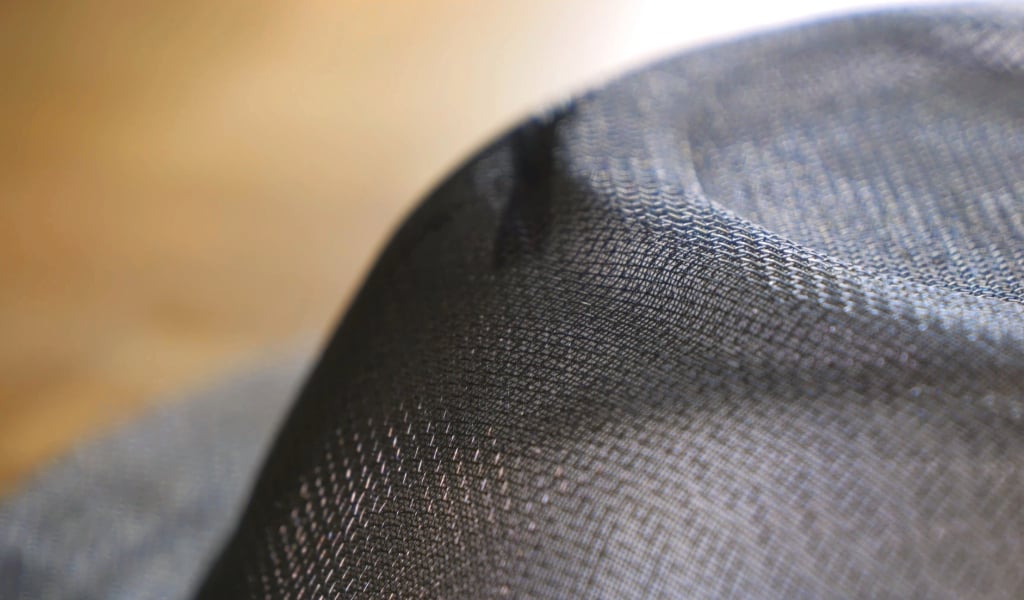


In molded pulp and fiber operations, it doesn’t take long for performance issues to surface when drainage begins to slow. Cycle times creep up, parts retain excess moisture, and production targets become harder to hit. What often gets overlooked is that these inefficiencies aren’t always tied to equipment limitations, as they’re frequently the result of mesh blinding, a gradual buildup of fine material and contaminants that restricts water flow through the screen.
The good news is that mesh blinding is both identifiable and manageable when you understand what’s happening at the surface level. Unlike obvious mechanical failures, blinding builds over time as fines, stickies, and additives accumulate and form a barrier over mesh openings. This reduces permeability, limits effective open area, and increases resistance to flow, which ultimately slows drainage and extends cycle times. By addressing the root causes instead of relying on repeated cleaning alone, operations can restore consistent throughput and product quality.
At W.S. Tyler, our mission is to use more than 150 years of wire weaving expertise to help create processes that are cleaner, safer, and more efficient. In pulp and fiber systems, that means designing mesh solutions that not only support proper fiber formation but also resist buildup from today’s increasingly complex furnish blends, including recycled materials and chemical additives.
This article breaks down what mesh blinding is and how it differs from plugging, explores how fines, stickies, fillers, and process conditions contribute to the problem, and explains how blinding directly impacts drainage and cycle time. From there, we’ll walk through practical prevention strategies, which includes cleaning best practices and when it’s time to look beyond maintenance and reconsider your mesh selection altogether.
Breaking Down Mesh Blockage in Pulp Processing
In molded pulp systems, all mesh blockage is not the same, and understanding that distinction is critical if you want to fix the problem instead of chasing it. The two most common forms you’ll encounter are mesh blinding and plugging, and while they often get lumped together, they behave very differently inside a pulp screen. That difference is what determines whether a quick adjustment works, or whether the issue keeps coming back.
Plugging happens when particles physically lodge inside the openings of the mesh. In pulp processing, this is typically caused by fibers or contaminants that are close in size to the aperture, allowing them to wedge in place and block flow directly. These plugs can significantly reduce open area, but they tend to be localized and, in many cases, can be dislodged with proper agitation, pressure changes, or cleaning methods.
Blinding, on the other hand, is more gradual and often more disruptive. Instead of individual openings getting blocked, fine particles and contaminants build up across the surface of the mesh, forming a thin layer that covers multiple apertures at once. This layer can include fines, dissolved materials, or sticky substances that adhere to the wire surface, effectively creating a barrier that restricts water flow.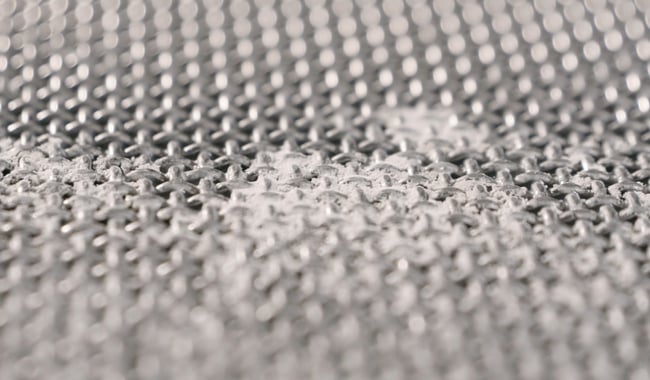
What makes blinding especially challenging in molded pulp applications is that it doesn’t always look severe at first. The mesh may appear intact, but the effective open area is steadily shrinking, increasing resistance to flow. As this happens, permeability drops, vacuum efficiency decreases, and drainage rates slow down, which is often before operators realize what’s happening.
From a performance standpoint, this is where the real impact shows up:
- Reduced drainage efficiency: water takes longer to pass through the mesh
- Longer cycle times: forming and dewatering stages are delayed
- Higher energy demand: systems work harder to maintain vacuum or flow
- Inconsistent part quality: uneven dewatering affects fiber formation
The key takeaway is that plugging is a mechanical blockage problem, while blinding is a surface fouling problem driven by material behavior and process conditions. Treat them the same way, and you’ll keep seeing the same performance issues resurface. Address them correctly, and you can start restoring consistent flow and stable cycle times before they begin to slip.
What Causes Mesh Blinding in Molded Pulp
Mesh blinding in molded pulp systems is rarely caused by a single factor. Instead, it’s the result of how different components in the furnish interact with the mesh surface over time. As modern operations increasingly rely on recycled fiber and performance-enhancing additives, the number of variables in the system grows, and so does the likelihood of buildup forming on the mesh.
One of the primary contributors is pulp fines. These microscopic fiber particles are small enough to pass through many screens, but they don’t always move cleanly through the system. Because of their high surface area and flexibility, fines tend to migrate into drainage pathways and form dense layers that restrict water movement. As fines content increases, resistance to dewatering rises significantly, making it harder for water to pass through the mesh efficiently. This is one of the earliest steps in the blinding process, as fines begin to form the base layer that other materials attach to.
Another major factor is stickies, which are especially common in recycled fiber streams. These contaminants, which are typically derived from adhesives, coatings, and synthetic binders, behave very differently than traditional solids. Instead of flowing through or being rejected cleanly, they become tacky under process conditions and adhere directly to mesh surfaces. Once attached, they act like a binding agent, capturing fines, fillers, and other debris to form a more stable and difficult-to-remove layer. This is why stickies are often at the center of persistent blinding issues.
Fillers and process additives further accelerate the problem. Materials such as calcium carbonate, clay, starch, and wet-strength resins are commonly used to enhance product properties, but they also influence how particles behave at the mesh surface. These substances can:
- Increase slurry density, making it easier for particles to settle onto the mesh
- Promote bonding between fines and fibers, creating tighter, less permeable layers
- Alter surface chemistry, making it easier for contaminants to adhere
Looking to enhance your mesh for your pulp and fiber system? Read more about it in the article below:
It’s also important to consider how these materials behave together and not just individually. In many cases, deposits found on mesh surfaces are a combination of fines, fillers, and adhesive contaminants, forming complex layers that are much more resistant to removal than any one component alone. This layered buildup is what transforms normal operation into a blinding issue that impacts performance.
Finally, system conditions play a supporting role in how quickly blinding develops. Higher contaminant loads from recycled furnish, closed water loops, and inconsistent chemistry control can all increase the concentration of problematic materials in circulation. When these conditions are present, even well-designed mesh can begin to lose effectiveness faster than expected.
The takeaway is that mesh blinding is the direct result of how fines, stickies, fillers, and additives interact within your process. Understanding those interactions is the first step toward slowing buildup and maintaining consistent drainage performance.
How to Prevent Mesh Blinding and Restore Performance
Once mesh blinding starts to impact drainage, the instinct is often to clean the screen and move on. While cleaning is important, it’s only one piece of the solution. Preventing blinding in molded pulp systems requires a combination of process control, proper maintenance, and when necessary, rethinking the mesh itself. Without addressing all three, blinding will continue to return and gradually erode performance.
A good starting point is understanding how process conditions accelerate blinding. In molded pulp, small shifts in operating variables can significantly increase how quickly material builds on the mesh. Key contributors include:
- Pulp consistency: Higher consistency means more solids, more fines, and more contaminants reaching the mesh at once, increasing the likelihood of surface buildup
- Flow rate and hydraulic balance: Uneven flow or dead zones create localized deposition where fines and stickies can settle and accumulate
- Vacuum level and forming time: Longer suction cycles can compact material against the mesh surface, making buildup denser and harder to remove
- Temperature and chemistry: Elevated temperatures and improper pH conditions can change how additives and contaminants behave, increasing adhesion and deposition rates
When these factors aren’t controlled, even a clean mesh can begin to blind faster than expected.
From a maintenance standpoint, consistent and appropriate cleaning practices are essential to restoring mesh performance, but they must match the type of buildup you’re dealing with. Common approaches include:
- Pressure washing or backwashing to dislodge loose particles from the mesh openings
- Ultrasonic cleaning, which uses high-frequency vibrations to break apart adhered fines and contaminants without damaging the mesh
- Chemical or solvent cleaning for sticky or bonded materials that cannot be removed mechanically
The key is to avoid overly aggressive methods that can damage wire integrity or alter opening size. A damaged mesh may appear clean but will perform inconsistently, leading to uneven drainage and reduced product quality.
In the end, preventing mesh blinding is about shifting from a reactive mindset to a proactive one. By aligning process conditions, maintenance practices, and mesh design, operations can maintain consistent drainage, stabilize cycle times, and reduce the constant need for intervention.
Eliminate Blinding and Improve System Efficiency
Mesh blinding is a direct limitation on how efficiently your molded pulp process can run. As buildup forms across the mesh surface, permeability drops and resistance to flow increases, forcing water to move more slowly through the system. The result is exactly what most operations experience: longer drainage times, higher vacuum demand, and extended cycle times that reduce overall throughput. When left unchecked, even small amounts of buildup can compound over time and steadily pull your process away from its optimal operating window.
The most effective way to move forward is to treat blinding as a system-level issue rather than a cleaning task. That means evaluating how fines, stickies, and additives are behaving in your process, and how your operating conditions may be making things worse. From there, align your maintenance strategy with the type of buildup you’re seeing, using targeted approaches like ultrasonic or chemical cleaning to remove adhered contaminants without damaging the mesh. Just as important, take a step back and assess whether your current mesh is designed to handle your furnish. If blinding returns quickly after cleaning, adjusting mesh characteristics like open area or weave design can significantly improve flow and reduce buildup over time.
At W.S. Tyler, our focus is on helping manufacturers create processes that are not only more efficient, but also cleaner and safer to operate. With over 150 years of woven wire expertise, we design mesh solutions that account for real-world conditions, such as recycled fiber streams, higher contaminant loads, and the need for consistent drainage performance. It’s about delivering solutions that hold up in practice, not just on paper.
Want to discover the importance of wire mesh fineness in your pulp & fiber system? Read the article below to learn more: